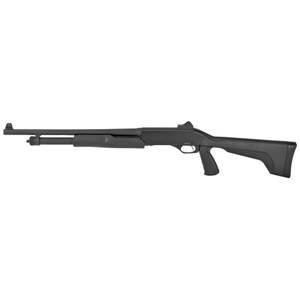
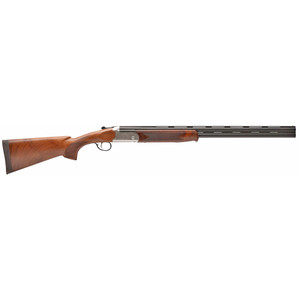
What a Shotgun Is Built For
A shotgun fires a shell loaded with either a single slug or a spread of pellets, which makes it the most versatile long gun you can own. The same gun can hunt birds, drop deer with slugs, break clays on the weekend, and sit by the bed for home defense, just by swapping the load and the choke. That flexibility is why a shotgun is often the first long gun people buy. It's simple to run, the ammo is everywhere, and one gun can wear a lot of hats.
We stock shotguns across every type and price point, and you can test-fire one on our indoor range before you commit.
Types and Gauges of Shotguns
Shotguns break down by how they cycle shells and what bore size they use, and the right one depends on your main job for it. The table below covers the main types we carry so you can see where each fits.
| Type | How it works | Best for |
|---|
| Pump action | You rack the forend by hand to load each shell | All-around use, defense, budget hunting |
| Semi-automatic | Cycles the next shell on its own when you fire | Faster follow-ups, clays, waterfowl |
| 12 gauge | The standard, hardest-hitting common bore size | Hunting, defense, all-purpose use |
| 20 gauge | Lighter shell with softer recoil | Smaller-framed and younger shooters, upland |
| Tactical | Short barrel, extended magazine, defense furniture | Home defense, range, duty-style setups |
| Break action | Hinges open to load one or two barrels | Clays, simple field guns, hunting |
A pump action shotgun is the workhorse most people start with because it's affordable, dependable, and runs any load you feed it. Semi-autos cost more but cut recoil and let you fire faster, which is why clay and waterfowl shooters favor them. A tactical shotgun trades that for a shorter barrel, a bigger magazine, and furniture set up for close quarters.
Gauge is the bore size, and 12 and 20 are by far the most common. A 12 gauge shotgun throws more pellets and hits harder, so it's the most popular size in the country and the ammo is cheap everywhere. A 20 gauge gives up a little power for lighter recoil and weight, which makes it the go-to for new, smaller-framed, and younger shooters. Smaller bores like 28 gauge and .410 exist for upland birds, but most buyers are choosing between 12 and 20.
How to Choose a Shotgun
The best shotgun for you comes down to what you'll do with it and how it fits, not the name on the receiver. Before you buy, work through these five things:
- Intended use. Hunting, clays, home defense, or an all-around gun. This sets your action, barrel length, and gauge.
- Gauge. A 12 gauge for the most power and the cheapest ammo, a 20 gauge for lighter recoil and weight.
- Action type. A pump for simplicity and price, a semi-auto for softer recoil and faster follow-up shots.
- Fit. The gun should shoulder cleanly and let your eye line up down the rib without craning your neck. A gun that fits is a gun you'll hit with.
- Budget. A solid, reliable pump shotgun starts around $250, so you don't have to overspend to get a gun you can trust.
The easiest way to settle it is to put a few in your hands. Our team will walk you through the options at the shop, and you can rent and shoot models on our range before you decide.
Best Shotgun Brands and Models
The best shotgun is the one that fits you and your job for it, but a handful of models stay popular for good reason. The Mossberg 500, Remington 870, and Benelli M2 lead the pack for their reliability, easy parts and accessory support, and decades of proven use.
Our curated shotgun lineup covers the brands shooters ask for most:
- Mossberg -- the 500, 590, and budget-friendly Maverick 88
- Remington -- the time-tested 870 pump and the 1100 and V3 semi-autos
- Benelli -- the M2 and M4, top picks for serious waterfowl and defense
- Beretta -- proven semi-autos and over-unders for clays and the field
- Winchester, Stoeger, and Browning -- solid choices across hunting and clay shooting
If you're setting up specifically for the house, a dedicated home defense shotgun build keeps the barrel short and the magazine full. And if you have your eye on a model we don't stock, just ask, since we can usually source it for you.
What a Shotgun Costs
Most shotguns sell for $250 to $900, with budget pump guns starting near $250 and premium semi-autos and over-unders running $1,200 to $2,500 or more. You're paying for the action, the barrel, the fit, and the finish, so there's a good shotgun at almost any price.
Total Impact backs every shotgun with a price-match guarantee. If you find the same gun for less somewhere else, we'll match it, so you can shop with us without second-guessing the price.
How to Buy a Shotgun Online
Buying a shotgun online is simple, and federal law just requires that the gun ship to a licensed dealer for pickup, not straight to your door. Here's how it works with us:
- Order your shotgun. Pick your gun and check out on our site.
- Pick your FFL. Choose a local licensed dealer (FFL) for the transfer, or pick up in our shop.
- We ship it. We send the shotgun to that dealer anywhere in the country.
- Pass your background check. Complete the standard background check at the dealer, then take it home.
You must be at least 18 to buy most shotguns. We handle FFL transfers both in and out, so we can ship your shotgun to a dealer near you or receive one you bought elsewhere. Picking up at our shop is usually the fastest and easiest route.
Frequently Asked Questions About Shotguns
What is the best shotgun for home defense?
The best home defense shotgun is usually a 12 gauge pump with a short barrel and an extended magazine, since it's simple, reliable, and hits hard at close range. Models like the Mossberg 500 and Remington 870 are common picks. We carry dedicated home defense shotgun builds set up for the job.
How much does a shotgun cost?
Most shotguns cost between $250 and $900, with budget pump guns near $250 and premium semi-autos and over-unders at $1,200 to $2,500 or more. Total Impact price-matches any competitor, so you always pay the best price.
Is a 12 gauge or 20 gauge better?
A 12 gauge hits harder and gives you more load options, while a 20 gauge has lighter recoil and weighs less. Most all-around buyers go with a 12 gauge, while smaller-framed and younger shooters often prefer a 20 gauge.
Should I get a pump or a semi-automatic shotgun?
A pump shotgun is cheaper, dead simple, and runs any load, while a semi-auto kicks softer and lets you fire faster. Pumps are the popular all-around and budget choice, and semi-autos win out for clays and waterfowl where speed matters.
What's the best shotgun for beginners?
The best beginner shotgun is a reliable 12 or 20 gauge pump like the Mossberg 500 or Remington 870, because they're affordable, easy to run, and simple to maintain. A 20 gauge is a good first pick for younger or smaller-framed shooters who want less recoil.
What is a tactical shotgun?
A tactical shotgun is a shotgun built for defense and close-quarters use, with a shorter barrel, an extended magazine, and furniture like a pistol grip or adjustable stock. They're usually 12 gauge pumps or semi-autos set up to hold more rounds and handle quickly.
Find Your Next Shotgun at Total Impact
Whether you're after your first field gun, a clay buster, or something dependable for the house, Total Impact has the shotguns, the price-match guarantee, and the range to help you choose with confidence. Browse the lineup above, and reach out if you want one we can source.