
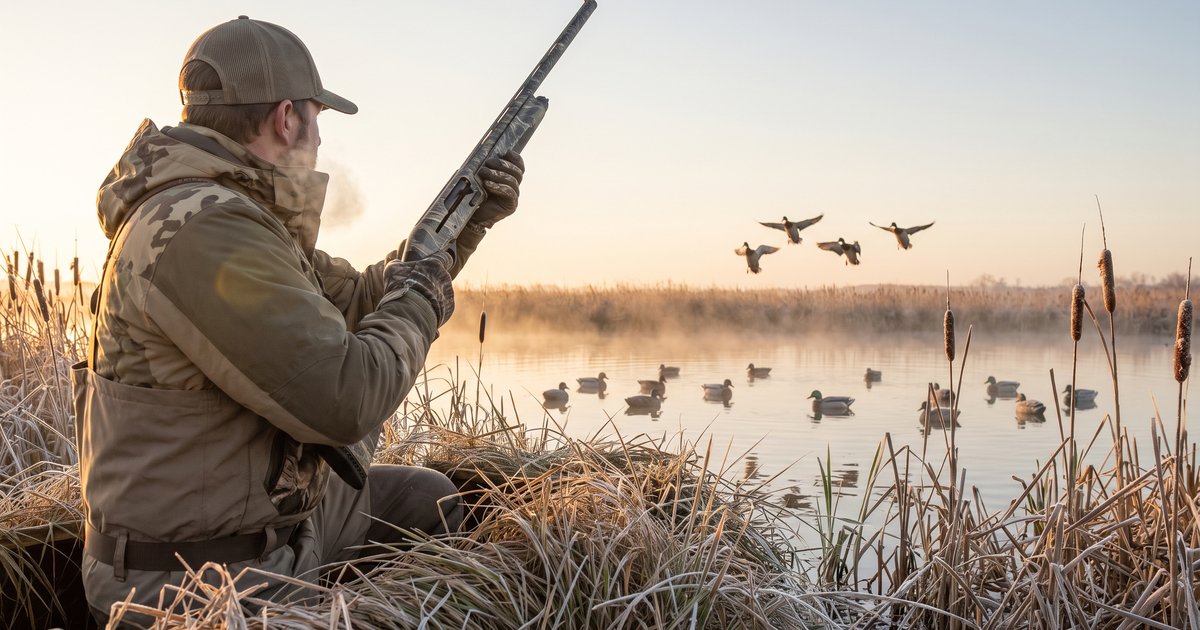
Best Duck Hunting Shotguns: Top Waterfowl Picks for 2026
Posted by Total Impact Guns & Range on Sep 30th 2026
TL;DR. For most serious duck and goose hunters, the best duck hunting shotgun is a semi-automatic 12-gauge with a 3-inch or 3.5-inch chamber. The Benelli Super Black Eagle 3, Beretta A400 Xtreme Plus, Browning Maxus II, and Winchester SX4 are the top waterfowl semi-autos.
Federal law requires approved nontoxic shot, such as steel, bismuth, or tungsten, for all waterfowl hunting in the United States. Steel patterns tighter than lead, so improved cylinder or modified chokes usually work best on ducks over decoys. Gas-operated guns generally recoil softer, while inertia-driven guns tend to run cleaner and lighter in mud and cold.
Duck season puts you in a blind before sunrise with a gun that's wet or frosted over, and it still has to cycle the second the birds commit. That's why the best duck hunting shotgun isn't always the one that wins on a spec sheet. Get the action, the load, or the choke wrong and you find out when the birds are already over the decoys.
What makes a good waterfowl shotgun
Waterfowl guns take more punishment than most shotguns ever see. Freezing mornings, rain, salt marsh, and mud are all part of a normal season, and you're shooting heavy magnum steel loads through it the whole way. A gun that's happy on a dry afternoon can gum up, freeze, or start rusting after a few mornings in the marsh, so the checklist for a duck gun looks a little different.
The 12-gauge is the default waterfowl gauge, and most of the guns and loads you'll find are built around it. The 20-gauge has gained ground lately because modern shells loaded with heavier-than-lead shot have closed some of the gap, so it's a fair option if you'd rather carry a lighter gun. If you're still sorting out gauges in general, here's how the common shotgun gauges compare.
Chamber length is the next call. A 3-inch chamber handles most duck hunting. A 3.5-inch chamber mainly earns its keep on geese and long passing shots, where the bigger shell gives you more to work with. If you're mostly decoying ducks, 3-inch is plenty. If geese are a big part of your season, the 3.5 makes sense.
Past gauge and chamber, four things separate a good duck gun from a merely OK one:
- Action reliability when wet or frozen. Water, ice, and mud get into everything, and the gun has to keep cycling anyway.
- Recoil management. A season of heavy magnum steel loads adds up, and a gun that softens the kick keeps you shooting well late in the morning, not just at first light.
- Corrosion-resistant finish and camo. Salt marsh and constant moisture go after bare metal. A coated or camo finish protects the gun and helps you stay hidden.
- Barrel length. You want a barrel that swings smoothly on crossing birds. Shoulder a few and see which one moves with you instead of fighting you.
The best duck gun is the one that cycles every time in bad weather, not the one with the longest spec sheet.
Steel shot, chokes, and shells for ducks and geese
Federal law requires approved nontoxic shot for all waterfowl hunting in the United States, so lead is out. The U.S. Fish and Wildlife Service spells out the rule and the approved shot types in its nontoxic shot regulations for waterfowl and coots, and the options you'll see most are steel, bismuth, and tungsten-based loads. Check the rules for your state and the area you're hunting too, since some places add their own.
Steel is harder than lead and holds its shape on the way out of the barrel, where softer lead deforms and throws more stray pellets. The result is a tighter pattern from the same choke. That's why most duck hunters run improved cylinder or modified chokes instead of full. Put steel through a full choke and the pattern gets tight enough that you're counting on a small core of pellets to hit a decoying bird.
Before you shoot steel through a choke tube, confirm it's rated for steel. Tight chokes and tubes that aren't rated for it can be damaged by hard shot. Check the markings or the manual, and if you can't tell, ask before you shoot it.
Ducks working close over decoys don't need much reach, so an open choke and smaller shot in a lighter load do the work. Geese are bigger, tougher birds and often come at longer range, which is where larger shot sizes and heavier shells earn their place. When a shot stretches out, you want the extra pellet weight behind it.
Then pattern the gun. Shoot a sheet of paper with the exact load and choke you plan to hunt with, at the distance you expect to be shooting, and see where the pellets go. Every gun shoots a little differently with every load, and you want to know what yours does before opening day.
The best shotguns for waterfowl hunting
Here are our picks, sorted by budget. Each one is a proven duck and goose gun. Finishes and configurations vary by model and year, so check the exact version for a camo or coated finish before you buy. If you want an independent take on the current models, Field & Stream's best duck hunting shotguns, tested and reviewed covers them.
Premium picks
This is the tier for hunters who put a lot of shells through a gun every season and want the best-known names in the blind.
- Benelli Super Black Eagle 3. The benchmark for inertia-driven duck guns. It's light and it runs clean in mud and cold. Expect sharper recoil than you'd get from a gas gun when you're pushing heavy steel loads.
- Beretta A400 Xtreme Plus. The soft-shooting gas gun in this group. If you shoot a lot of heavy magnum steel over a season, the gentler recoil is the reason to pick it over an inertia gun.
- Browning Maxus II or A5. Proven alternatives if you want premium but not a Benelli or a Beretta. Both are established duck guns, and it comes down to which one feels better when you shoulder it.
Mid-range value picks
Near the thousand-dollar mark, two semi-autos stand out for hunters who want a serious duck gun without stepping up to premium money.
- Winchester SX4 Waterfowl Hunter. One of the strongest semi-autos in that range, and it's built with waterfowl in mind. It gets you into a dependable duck gun without paying premium money.
- Franchi Affinity 3.5. The other strong pick at that price. The 3.5 in the name is the chamber length, so it's ready for the big goose loads.
Budget picks
You don't need to spend a lot to hunt waterfowl. These are the picks when the budget is tight or when you'd rather have the simplest gun possible.
- Stoeger M3500. An affordable 3.5-inch semi-auto. You get the chamber length for geese and long shots, plus a semi-auto action, without a premium price tag.
- Mossberg 835 or Benelli SuperNova. Both are 3.5-inch pumps, and they're the pick for hunters who want maximum simplicity. A pump is also the most affordable and most weather-tolerant way to go.
Several of these models come in 20-gauge versions. If you mostly shoot ducks over decoys and want a lighter gun to carry and swing, a 20-gauge is worth a look, and we break down whether a 20 gauge is enough gun if you're on the fence.
We're leaving prices and stock out of this list on purpose, since both change. To see what's on the shelf and what it costs right now, compare our semi-auto shotguns or ask the team. If there's a model you want that we don't carry, we can track it down for you.
Gas, inertia, or pump in the duck blind
Each of the three common shotgun actions trades off recoil, cleaning, and price in a different way. Which one fits comes down to how much you shoot and what your mornings look like.
Gas-operated semi-autos are the softer-shooting choice, which matters if you fire a lot of heavy magnum loads. They tap a little of the gas from each shot to cycle the action, and the price of that softer recoil is more parts to clean after a wet hunt.
Inertia-driven semi-autos cycle off the recoil of the gun itself. They're lighter and they run cleaner, and they tolerate grime and cold well, which is a big deal in mud and on freezing mornings. The tradeoff is noticeably sharper recoil, and you'll feel it after a few boxes of magnum steel.
A pump is the most affordable and the most weather-tolerant of the three, since you're the one cycling it. The risk is short-stroking. In a fast volley, if you don't run the slide all the way back and all the way forward, the next shell won't feed.
If you shoot a lot of heavy magnum loads and recoil wears on you, lean toward gas. If you hunt cold, muddy spots and want the lightest gun that keeps running with the least fuss, lean toward inertia. If price or simplicity comes first, a pump does the job, as long as you run it hard every time.
If this is going to be your only shotgun, you don't have to choose between the marsh and the house. A pump or semi-auto with a second, shorter barrel can be your duck gun during season and a home-defense gun the rest of the year. Our guide to setting up a shotgun for home defense covers what to look for on that side.
Fitting and caring for your duck gun
Fit matters more in a blind than it does at the gun counter. Heavy waders and a thick coat shorten your effective length of pull, so a stock that felt right in a T-shirt at the counter can fit differently once you're bundled up. When you're trying guns, shoulder them in the layers you'll actually hunt in. Bring the coat if you have to, mount the gun a few times, and see whether it comes up to your eye the same way each time.
Most modern waterfowl semi-autos offer adjustable stock shims and spacers, which is the usual fix for fine-tuning fit. If a gun is close but not quite there, ask about them before you rule it out.
A few practical features pay off in the field. Oversized controls are easier to work with gloves on, a sling makes a long walk in easier on your shoulder, and a camo or coated finish resists rust when the gun spends the morning in wet cover.
After the hunt, don't leave a wet gun zipped up in a case. Any gun that's been exposed to saltwater, rain, or mud needs to be dried, wiped down, and lubricated before it goes into storage.
Where to buy your waterfowl shotgun
You can shop our hunting shotguns online. The lineup is curated around the models hunters actually buy and use, and if you find the same gun for less somewhere else, our price-match guarantee has you covered.
If you're local, stop by the shop and shoulder a few of the guns above. Fit and swing are hard to judge from a product page, and picking up two or three side by side tells you more than reading spec sheets.
If you're outside our area, you can order online and have the gun shipped to a local FFL dealer, and our guide on how buying a gun online and shipping to an FFL works walks through the steps.
Tell us how you hunt, whether that's decoying ducks or working geese, and we'll help you find the gun that fits.