
Best 9mm Pistols for Concealed Carry Under $600
Posted by Joel Sheran on Aug 11th 2026
TL;DR. The best 9mm for concealed carry under $600 comes down to picking the right size class and price tier for how you actually plan to carry, not chasing a single "best gun" on a list. Sub-$600 covers most of the proven carry-9mm market, from around $250 budget guns up to $500-$600 do-it-all pistols, and reliability shows up well below the top of that range. What separates a good budget gun from a bad one is striker-fired simplicity, a size you'll actually carry every day, and a grip that fits your hand, not the price tag. Plenty of guns in this range now ship optics-cut, a feature that used to cost a lot more.
If you're buying your first carry gun, the sticker prices alone can make the decision feel harder than it needs to be. Every listing claims to be the "best," and it's tough to tell which of those claims are marketing and which ones hold up at the range. The real question isn't which gun ranks highest on somebody's list, it's which price tier and size actually fits how you plan to carry every day.
What $600 actually buys you in a carry 9mm
Six hundred dollars sounds like a hard ceiling, but it's not really a compromise line. It's the middle of where most people actually buy. The sub-$600 band covers the bulk of the carry-9mm market, starting around $250 for a bare-bones budget pistol and running up through $500 to $600 for the more refined options that do it all. Reliable, carry-ready pistols show up well before you hit the top of that range.
A lower price tag feels like it has to mean something got cut, but that's not usually the difference that matters. What actually separates a good budget carry gun from a bad one isn't price, it's whether the manufacturer has proven the design over hundreds of thousands of rounds in the field. Cheap and unreliable is a real category, but it's smaller than most first-time buyers assume, and it's not the same thing as affordable.
Two price tiers do a good job explaining what's actually out there: an entry tier around $400 to $500 built around simple, proven workhorses, and a do-it-all tier from $500 to $600 where you start picking up better triggers, sights, and features. If you want the fuller picture before narrowing down to a price, our complete guide to concealed carry walks through the decisions that come before and after the gun itself.
This shop's lineup works the same way. It's a curated selection of the top-performing 9mm carry guns, backed by the full breadth of the industry if you're after something more specific, and backed by a price match either way. You're not trading reliability for a lower price by shopping here. You're getting the same guns that show up at the top of this list anyway, at a price that's already competitive.
What actually matters in a budget carry 9mm
Strip away the marketing and a handful of things actually decide whether a budget 9mm works as a daily carry gun. Reliability comes first, full stop. A carry gun that occasionally hiccups isn't a carry gun. After that comes concealable size, enough capacity to matter, a trigger you can shoot accurately under stress, sights you can actually see, and a grip that fits your hand. USCCA, the country's largest concealed carry association, is one of several trainers that point new carriers toward this same short list, and it matches what shows up on the range day after day.
Striker-fired designs dominate this price range for a reason. There's no external hammer to manage, no manual safety to remember, and the trigger pull feels the same on shot one and shot fifteen. That consistency matters more for a budget gun than a premium one, since you're not paying extra for a refined single-action trigger job. Simple also means fewer parts to maintain and fewer things that can go wrong when you're field-stripping the gun on your kitchen table.
Optics-cut slides are the newest criterion worth caring about, and they're one of the biggest shifts in this price range over the last few years. A slide milled to accept a red dot used to be a feature you paid a premium for, if you could find it at all under $600. Now it shows up standard on a growing number of budget guns, which means you can add a dot later without buying a new gun or sending the slide out for custom machining.
None of that matters as much as fit. A gun that scores well on paper but doesn't point naturally for your hand, or that you have to fight to reach the trigger on, isn't the right gun for you no matter what a review says. Grip fit and how a pistol points are things you feel, not things you read about, and the only real way to know is to get one in your hand.
The entry tier: reliable 9mm carry pistols around $400-$500
The entry tier is where the proven workhorses live. These are simple, striker-fired, carry-sized pistols built by manufacturers who've been making the same basic gun, refined generation over generation, for years. Nothing about them is flashy, and that's the point. They run, they're easy to maintain, and they're the guns that show up most often in duty holsters and range bags at this price.
What you get in this tier is dependable function without the extras. Triggers tend to be a little heavier or a little grittier than what you'd feel on a $600 gun. Sights are usually the basic three-dot or plain black variety rather than anything tritium or fiber-optic. Grip textures can be plainer, and you might not find an optics-cut slide on every option down here. None of that affects whether the gun goes bang when you need it to, and that's the trade a lot of first-time carriers are happy to make for a lower price and a proven track record.
Exact models and prices in this tier move around more than a static list can keep up with, so the smartest move is to confirm what's actually in stock and lean on the staff for a current recommendation. If you're new to carrying altogether, the carry pistols recommended for brand-new shooters is a good next stop, since it goes deeper into what makes a gun forgiving for someone who hasn't carried before.
The do-it-all tier: $500-$600 9mm carry pistols
Step up into the $500 to $600 range and the extra money buys real refinements. Triggers get lighter and crisper. Sights start showing up in tritium or fiber-optic. Capacity often ticks up a round or two over the entry tier. And optics-cut slides become closer to standard than optional, which matters if you know you want a red dot down the road and don't want to pay to have a slide milled later.
The pistols that live in this tier tend to be the more refined versions of the same basic designs from the entry tier, built by manufacturers who've put more development into the trigger, the ergonomics, and the finish. You're not buying a different category of gun. You're buying a more polished version of the same reliable formula, and for a lot of carriers, that polish is what makes the difference between a gun you tolerate carrying and one you actually want to carry every day.
Whether the step up is worth it comes down to how you carry and how much you shoot. Someone carrying daily and training regularly will feel a better trigger and better sights on every single range trip. Someone buying a gun mostly for peace of mind, who might shoot a box of ammo a few times a year, may not notice the difference enough to justify the extra spend. Neither answer is wrong. It depends on your habits, not on which gun ranks higher on a list.
This tier is also where the most cross-shopped comparisons live, because two of the most popular guns in this price range get compared to each other constantly. Our Glock 19 versus Sig P320 breakdown walks through that exact head-to-head if you're trying to decide between two strong options instead of one. You can also browse the current concealed carry handguns to see what's actually in stock at each price point right now.
Micro-compact vs. compact: matching the gun to how you carry
Size class is the decision that actually determines whether you carry the gun every day or leave it in the safe after week two. Micro-compacts conceal easier under a t-shirt or in warmer weather, and they disappear in an appendix or pocket holster in a way a bigger gun won't. That concealment comes at a cost: smaller grips, fewer rounds in the magazine, and a gun that's genuinely harder to shoot fast and accurately because there's less real estate for your hand.
Compacts give up some concealment for a gun that's easier to shoot well. More grip means more control, more capacity means more rounds before a reload, and the sight radius is long enough that follow-up shots come faster. The trade-off is a gun that prints more under thinner clothing and needs a bit more thought around wardrobe and carry position.
There's no universal right answer here. What fits a guy carrying appendix in shorts and a t-shirt in Florida heat is different from what fits someone carrying strong-side under a jacket in cooler weather. Body type, wardrobe, and where you actually clip the holster all change which size class makes sense, so match the gun to your real life instead of to whichever size tops a generic ranking.
Grip fit and slide-rack effort are also tied directly to size. Smaller guns often have stiffer recoil springs relative to their size, which can make racking the slide harder, and that matters a lot if you've got smaller hands or reduced grip strength. The only reliable way to settle the micro-versus-compact question is to shoot both. The indoor range here lets you do exactly that before you commit to either size.
Budgeting beyond the gun: holster, ammo, and break-in
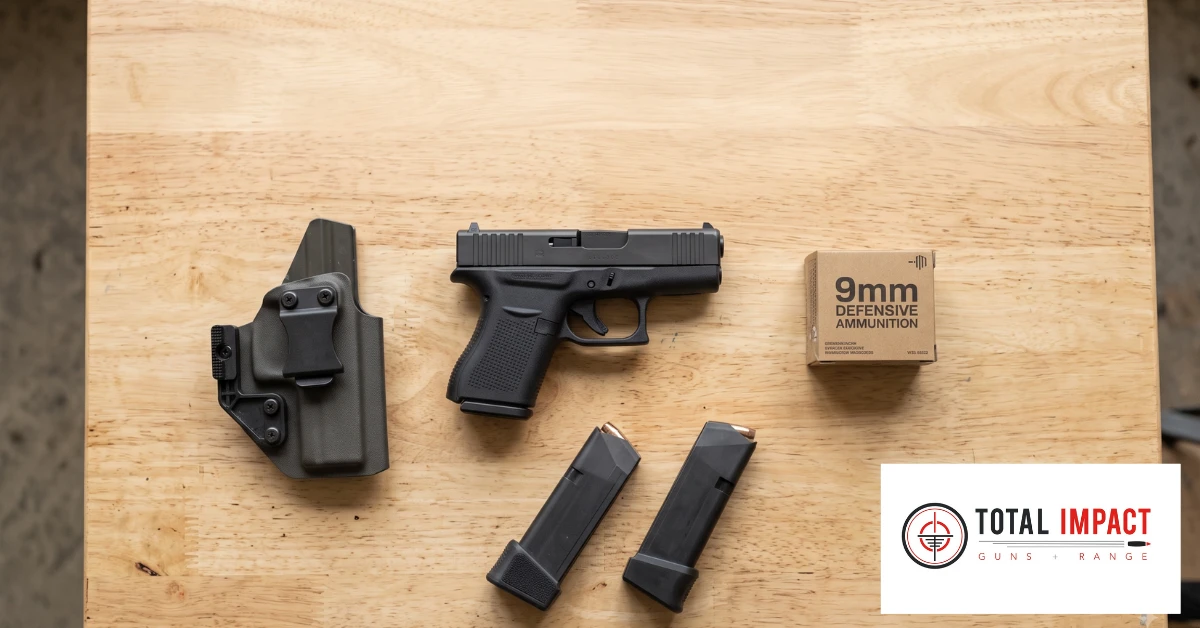
The pistol is the biggest line item, but it's not the only cost of carrying responsibly. A quality holster that fully covers the trigger guard is not optional, and neither is a supply of defensive ammo and practice rounds to actually learn the gun. Budget for the full setup up front instead of getting surprised by it after you've already spent your $500 or $600 on the pistol.
Break-in matters more on a budget gun than a premium one, and it's not optional either way. Run a real round count of your actual carry ammo, not just cheap practice ammo, through the gun before you trust it for daily carry. Pew Pew Tactical, a widely read source for gun reviews and gear testing, is one of several outlets that recommend running several hundred rounds through a new carry pistol, with at least a couple of magazines of your actual defensive load, before it earns a spot on your hip. Skipping that step is how people end up finding out about a feeding issue at the worst possible time.
Think of the holster as a safety item, not an accessory. A holster that doesn't fully cover the trigger guard is a genuine safety risk, arguably a bigger one day to day than whether the gun has a manual safety. None of this is an upsell. It's just what carrying a gun responsibly actually costs, and it's worth budgeting for from the start instead of treating the pistol as the finish line.
Try before you buy: testing a carry 9mm before you commit
The smartest move you can make on a budget carry gun is shooting it before you buy it. A spec sheet can tell you the trigger weight and the magazine capacity, but it can't tell you how the gun points for your hand or whether the recoil feels manageable to you specifically. The indoor range attached to the shop exists for exactly this reason, so you can test fit and feel firsthand instead of guessing off a listing.
Once you've found a size and tier that feels right, the curated 9mm selection here means you're choosing from guns that have already been vetted for exactly this kind of daily carry, backed by a price match if you find the same gun cheaper somewhere else. There's no reason to chase a listing on another site when you can get the same gun here at a price that's already competitive.
Come try a carry 9mm on the range, or browse the full 9mm pistol lineup online to see what's in stock right now.