
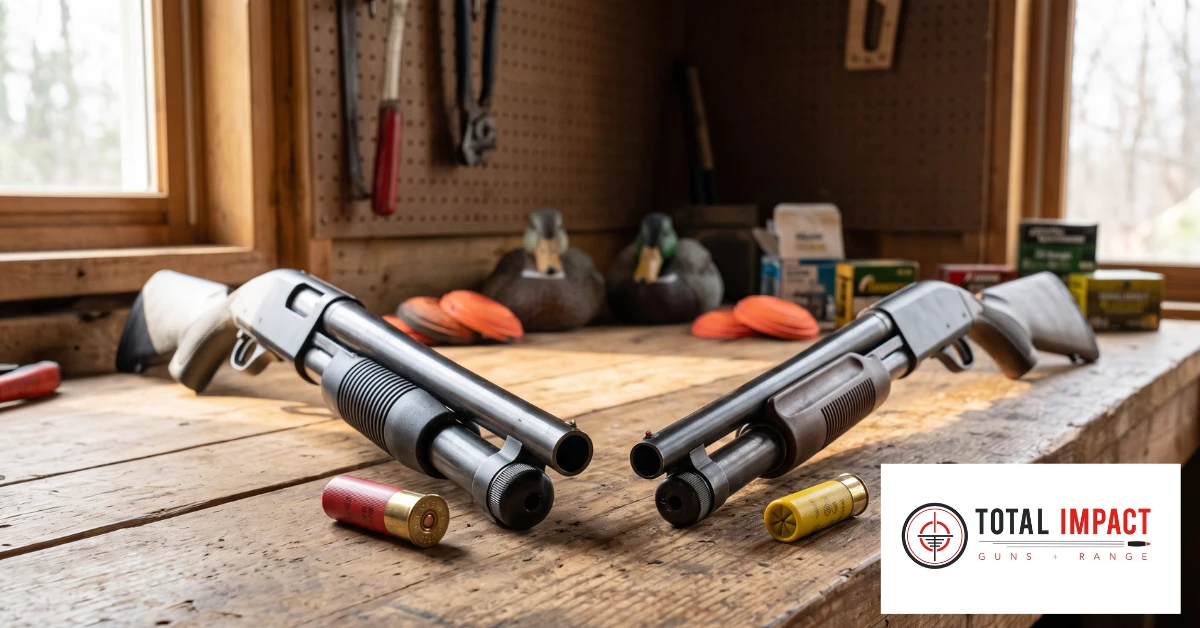
12 Gauge vs 20 Gauge: Which Should You Buy?
Posted by Joel Sheran on Aug 11th 2026
TL;DR. A 12 gauge shotgun has a 0.729-inch bore and a 20 gauge has a 0.615-inch bore, so the smaller gauge number actually means the bigger hole. In the 12 gauge vs 20 gauge debate, recoil is usually the deciding factor. The 20 gauge kicks roughly 30 to 50 percent less than a comparable 12 gauge, and its lighter frame makes it easier to carry and shoot, a big reason it's a common pick for beginners and smaller-framed shooters.
The 12 gauge trades that lighter recoil and lighter carry weight for a heavier payload, denser pattern, and a far wider ammo selection. Both are effective for home defense at across-the-room distances, where shot placement matters more than raw gauge.
Every new shotgun buyer hits the same fork in the road, and the internet has strong opinions about which fork is right. There isn't one right answer. Both gauges can drop a mallard, break clays, and protect a bedroom door, just with a different feel in your hands and a different set of tradeoffs behind that feel.
What "gauge" means, and why 12 and 20 dominate
"Gauge" trips people up because it runs backward from what you'd expect. The number comes from an old system that counts how many lead balls, each sized to exactly fit the barrel, it takes to add up to one pound. A 12 gauge barrel is sized so it takes 12 of those balls to weigh a pound. A 20 gauge takes 20 smaller balls. Fewer, bigger balls per pound means a bigger bore, so the smaller number is actually the bigger gun.
Put that into inches and the gap gets real. A 12 gauge bore measures 0.729 inches across. A 20 gauge measures 0.615 inches. That difference drives almost everything else in this comparison: the payload the gun can push, the recoil you'll feel, and the weight of the gun you end up carrying.
Shotguns come in other gauges too (16, 28, .410, even 10), but 12 and 20 gauge dominate the market for a reason. Between the two, they cover the range most shooters actually need, from serious hunting and home-defense power down to a lighter, easier-shooting option, and gun makers have built far more guns, ammo, and accessories around those two than anything else. If you want the full picture of how gauge works across the whole shotgun lineup, our full breakdown of shotgun gauges covers it.
Recoil and shootability, the difference you'll feel first
Recoil is the part you'll actually feel, and it's the biggest practical difference between these two guns. A 12 gauge pushes a heavier payload with a bigger powder charge, and that energy has to go somewhere. Most of it goes into your shoulder.
A 20 gauge with a comparable load typically kicks 30 to 50 percent less than a 12 gauge. You'll notice that gap on the very first shot.
But gauge alone doesn't decide how hard a gun kicks. A very light 20 gauge loaded with heavy shells can kick as hard as, or harder than, a heavier 12 gauge shooting a mild load. Gun weight and ammo choice shape felt recoil just as much as the gauge stamped on the barrel. A featherweight 20 gauge youth or turkey gun, stacked with heavy magnum turkey loads, isn't the soft-shooting gun its reputation promises.
For newer shooters, the recoil difference matters beyond comfort. Less kick means faster follow-up shots and less flinching, and flinching wrecks accuracy more than almost anything else a new shooter does wrong. A shooter who isn't bracing for pain shoots better and shoots more often, which is exactly why the 20 gauge works so well as a first shotgun.
Research from NRA Family makes the same case for home defense specifically. Reduced recoil makes a gun more controllable for a wider range of shooters, which matters more under stress than raw stopping power on paper.
Specs on a page don't replicate a trigger pull, so the only way to really know how a gauge feels in your hands is to shoot it. Come out to our indoor range and shoulder both a 12 and a 20 before you buy. Ten minutes on the line will tell you more than any recoil chart.
Power, payload, and pattern
The 12 gauge's bigger bore isn't just a number on a spec sheet. It lets the shell carry more shot and bigger payloads, which means a denser pattern hitting the target and more energy carried downrange.
In practical terms, that translates to a few real advantages: more effective range before pellets spread too thin to do the job, better performance on larger or tougher game like turkey and big-bodied waterfowl, and more room for heavy loads, including larger buckshot sizes that a 20 gauge shell simply can't hold as much of.
None of that makes the 20 gauge underpowered. At the distances most shotguns actually get used, inside 35 to 40 yards for most hunting and well inside that for home defense, a 20 gauge still puts a dense, effective pattern on target. The gap between the two gauges narrows sharply up close and only really opens up at longer range or against tougher animals.
The trap is assuming more power is automatically better. Once a pattern is dense enough to do the job in front of you, extra pellets and extra powder just add recoil without adding anything you'll use. Buy for the job, not for the biggest number on the box.
Ammunition cost, selection, and availability
12 gauge is the most common shotgun chambering in the country, and that shows up every time you buy a box of shells. It's generally cheaper, easier to find on a shelf or online, and available in a wider range of loads than any other gauge, from cheap target loads to specialty hunting and defensive rounds.
20 gauge ammo isn't hard to find. Most retailers carry a solid selection. It typically costs a bit more per box, though, and offers fewer specialty options. If you shoot a high volume of rounds, at the range, in a training class, or through a long dove season, that per-box difference adds up.
Selection matters most in a couple of specific spots: defensive buckshot and specialty hunting loads. The 12 gauge's deeper shelf is a real advantage if you're shopping for a particular buckshot size or a niche hunting load, since 20 gauge options thin out fast the more specific you get.
Weight, handling, and fit
20 gauge shotguns are usually built on smaller, lighter frames than their 12 gauge counterparts, not just chambered for a smaller shell in the same-size gun. That lighter frame carries easier through a long day in the field and swings faster when a bird flushes without warning.
Frame size matters for fit as much as it matters for carrying weight. A lighter, slimmer 20 gauge often fits smaller-framed adults, younger shooters, and older or returning shooters better than a full-size 12, both in how it shoulders and in how much gun they're managing on a cold morning with gloves on.
The 12 gauge's extra weight cuts the other way at the shooting position. A heavier gun is more tiring to carry across a field, but that same weight helps soak up recoil when the shot actually breaks. Heavier guns tend to shoot softer than their gauge would suggest, for exactly that reason.
Which gauge for which use
For hunting, the two gauges split fairly cleanly by target. A 12 gauge leans favored for waterfowl, turkey at distance, and larger game, where payload and range matter most. A 20 gauge leans favored for upland birds and any hunt where you're carrying the gun all day, since the lighter weight and softer recoil pay off over hours in the field.
Clay sports use both gauges, and the choice usually comes down to two things: how much recoil you want to absorb, and how many rounds you're putting through the gun in a session. A shooter running 100 rounds through a sporting clays course will feel a 12 gauge's recoil very differently than someone shooting a 25-round round of skeet.
For home defense, both gauges get the job done. At the distances involved inside a house, across a hallway or a bedroom, both are effective, and the choice comes down to what you'll actually shoot well under stress. A 20 gauge is easier to control, especially for someone who hasn't put thousands of rounds through a shotgun. A 12 gauge gives you more load options, including a wider range of defensive buckshot. Shot placement matters more than the gauge debate here. A well-placed 20 gauge load beats a poorly placed 12 gauge load every time.
For a deeper look at building out a home-defense setup, our guide to the best home-defense shotguns and our complete home defense firearms guide go further into specific models and loads.
Field & Stream's breakdown runs through this use-case-by-use-case comparison in more depth if you want the full hunting picture.
So, which should you buy?
Choose a 12 gauge for maximum versatility, power, and ammo selection. Choose a 20 gauge for lighter recoil, easier handling, and a gun you'll actually enjoy shooting.
If you're recoil-sensitive, smaller-framed, or newer to shotguns, the 20 gauge is going to serve you better and get you more range time. If you're a high-volume shooter, or you're hunting big game or waterfowl where payload matters, the 12 gauge earns its extra weight and kick.
The best gauge, honestly, is the one you'll actually shoot. A gun that sits in the safe because it's unpleasant to shoulder doesn't protect your house or fill your game bag. Practice beats power every time.
We carry both gauges across a range of models and price points, and our team can help you match a gun to what you're actually going to do with it. Browse our 12-gauge shotguns or check out our 20-gauge shotgun selection, or come shoulder a few in person before you decide.