
Glock 19 vs Sig P320: Which is the best for Concealed Carry
Posted by Joel Sheran on Jan 9th 2026
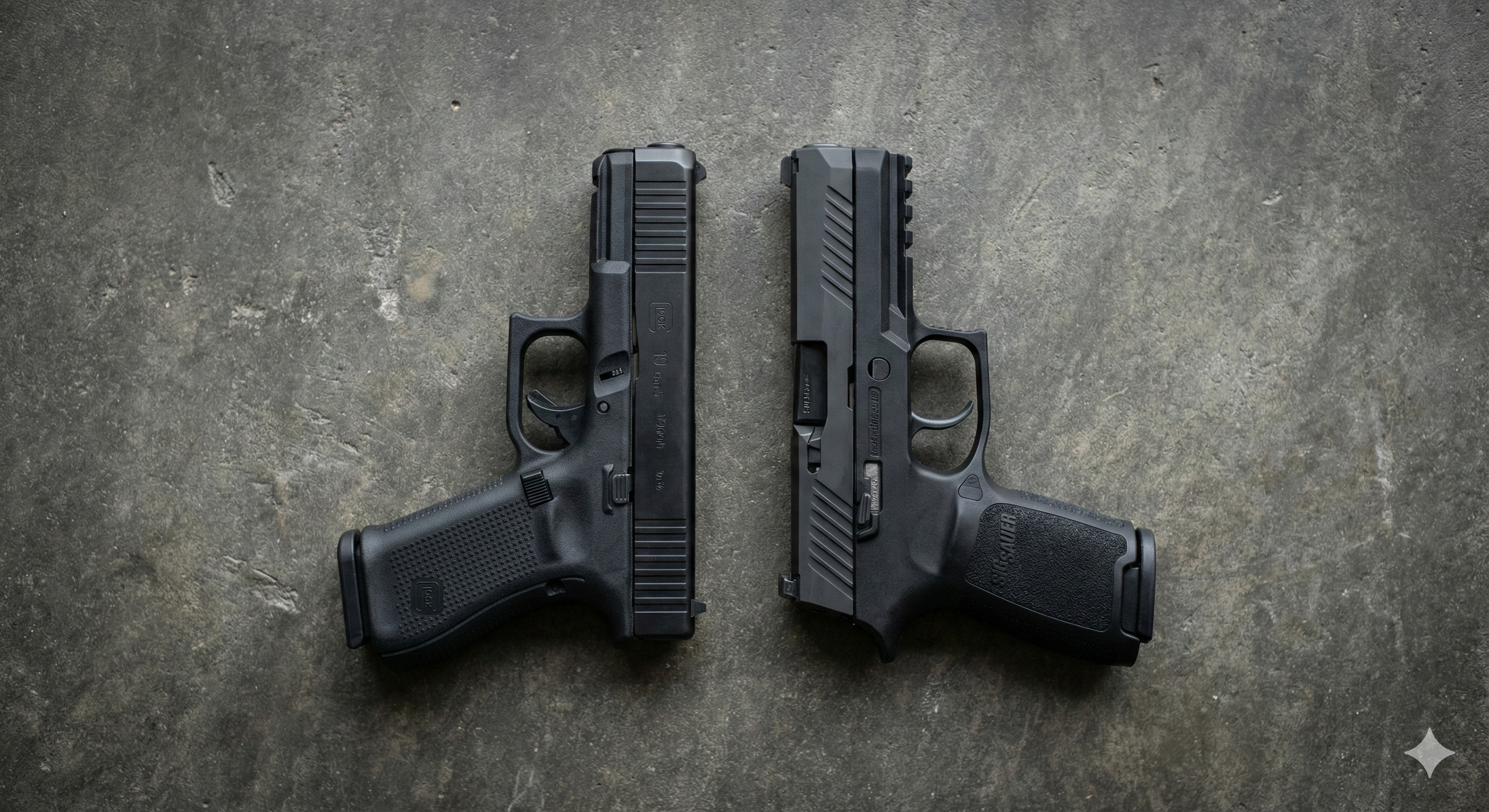
When it comes to compact 9mm pistols for everyday carry, two names dominate the conversation: the Glock 19 and the Sig Sauer P320. Both have earned devoted followings for good reason—they're reliable, accurate, and trusted by law enforcement agencies and armed civilians worldwide.
But which one belongs on your hip?
That depends on what matters most to you. In this comparison, we'll break down the differences in size and dimensions, magazine capacity, trigger characteristics, modularity, and real-world carry considerations. By the end, you'll have a clear picture of how these two stack up—and which might be the better fit for your carry needs and preferences.
Size and Dimensions
Glock 19 Measurements
The Glock 19 measures 7.36" in overall length, 5.04" in height, and 1.34" in width, with a 4.02" barrel. Unloaded, it weighs 23.63 oz.
These dimensions hit a sweet spot for concealment. The sub-5.1" height keeps the grip from printing under most cover garments, while the slim width disappears easily against the body. Medium to larger-framed individuals can comfortably carry appendix or strong-side IWB. Smaller carriers may find the grip length challenging for appendix carry but typically have no issues at the 4 o'clock position.
Sig P320 Compact Measurements
The P320 Compact comes in at 7.2" overall length, 5.3" height, and 1.3" width, with a 3.9" barrel. It tips the scales at 25.8 oz unloaded.
Compared to the Glock 19, the P320 is fractionally shorter in length but roughly a quarter-inch taller—a difference you'll notice in the grip. It's also about 2 oz heavier, which adds up over a full day of carry. The slightly increased height can make deep concealment trickier for appendix carriers, particularly when seated or bending forward.
Which Conceals Better?
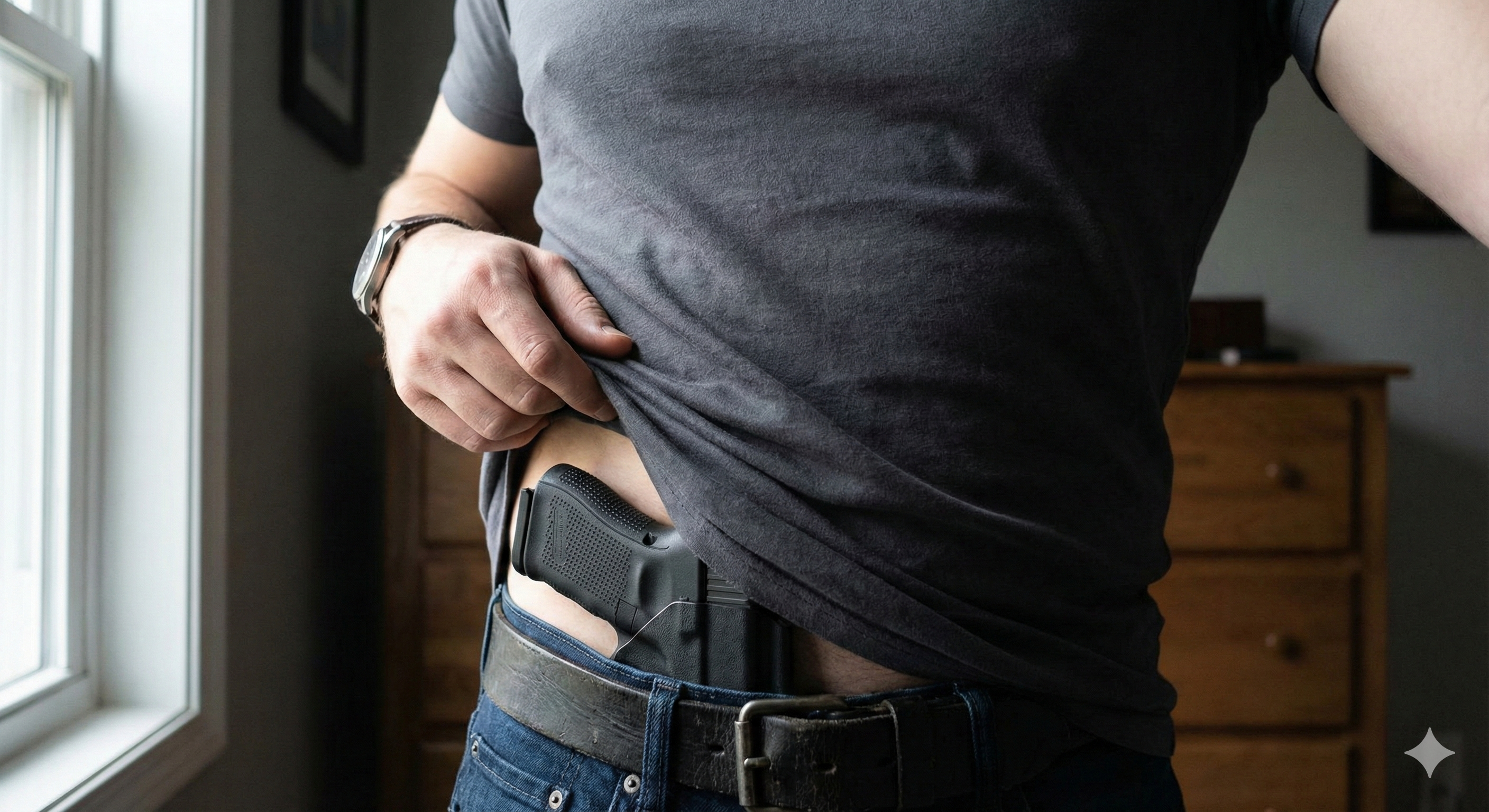
Honestly, these two are close enough that splitting hairs feels pointless. We're talking fractions of an inch and a couple ounces.
That said, the Glock 19's lower grip height gives it a slight edge for appendix carry, where every bit of vertical real estate matters. The P320's shorter overall length offers no practical concealment advantage—barrel length rarely causes printing issues.
The bigger factors are holster quality, belt stiffness, and your body type. A good holster and proper positioning will make either pistol disappear under a t-shirt. Don't let minor spec differences drive your decision here.
Magazine Capacity and Caliber Options
Standard Capacity
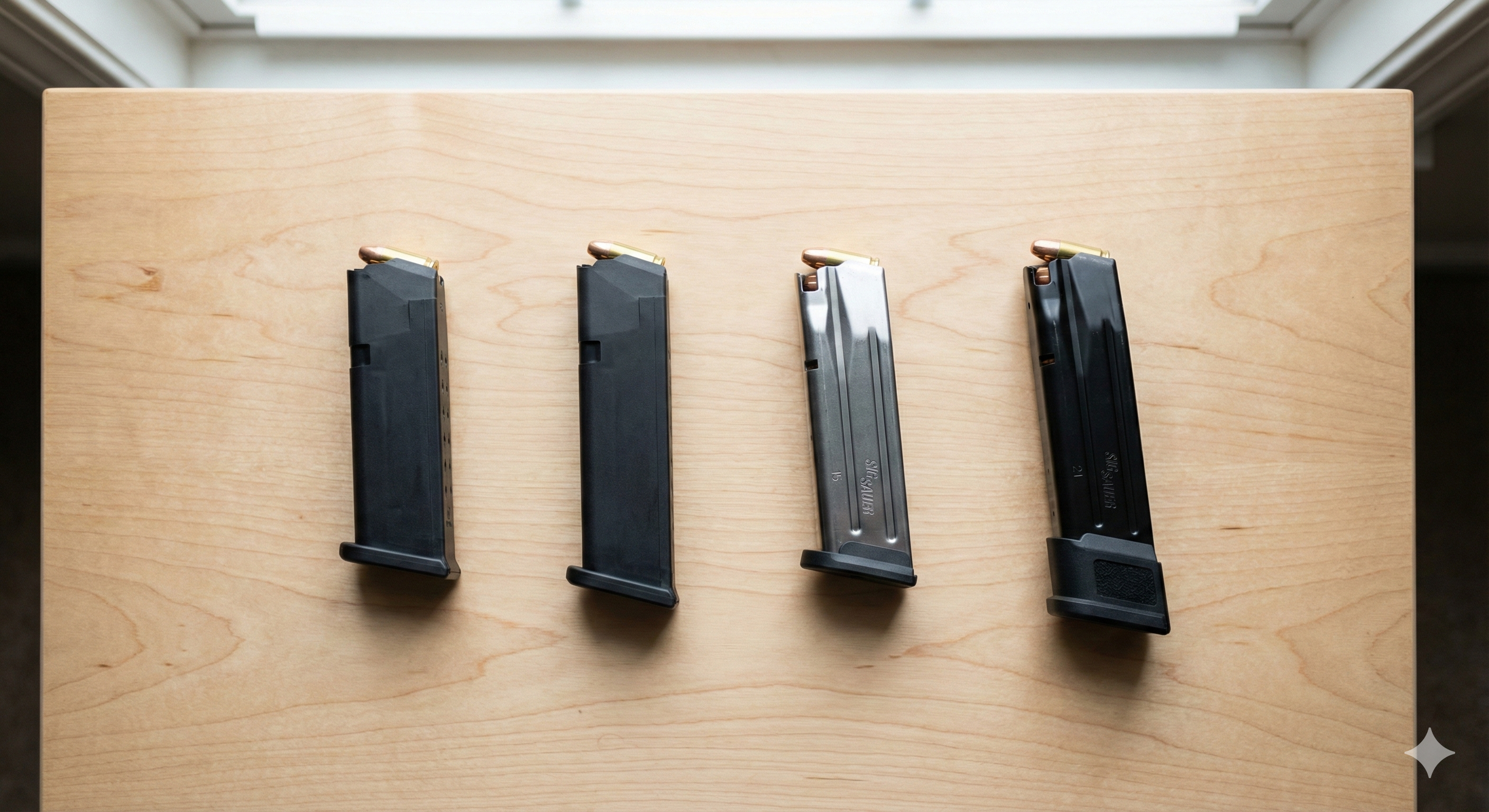
Both pistols ship with 15-round magazines in 9mm—plenty of firepower for concealed carry.
Where things get interesting is backup magazine compatibility. The Glock 19 accepts full-size Glock 17 magazines, giving you 17 rounds with a slightly extended baseplate. The P320 Compact takes full-size P320 magazines as well, offering 17-round or 21-round options depending on the configuration.
For most carriers, 15+1 is more than adequate. But having the flexibility to carry a higher-capacity backup mag is a nice option with either platform.
Caliber Flexibility
The Glock 19 is a 9mm pistol, full stop. If you want .40 S&W, you'll need to buy a Glock 23—a completely separate firearm.
The P320 takes a different approach. Thanks to its modular Fire Control Unit, you can swap grip modules and slides to convert between 9mm, .357 SIG, .40 S&W, and even .45 ACP. One serialized chassis, multiple calibers.
For the majority of concealed carriers committed to 9mm, this flexibility is irrelevant. But if you like the idea of one gun that can do double duty across calibers, the P320 offers something the Glock simply can't match.
Trigger Feel and Shootability
Glock 19 Trigger
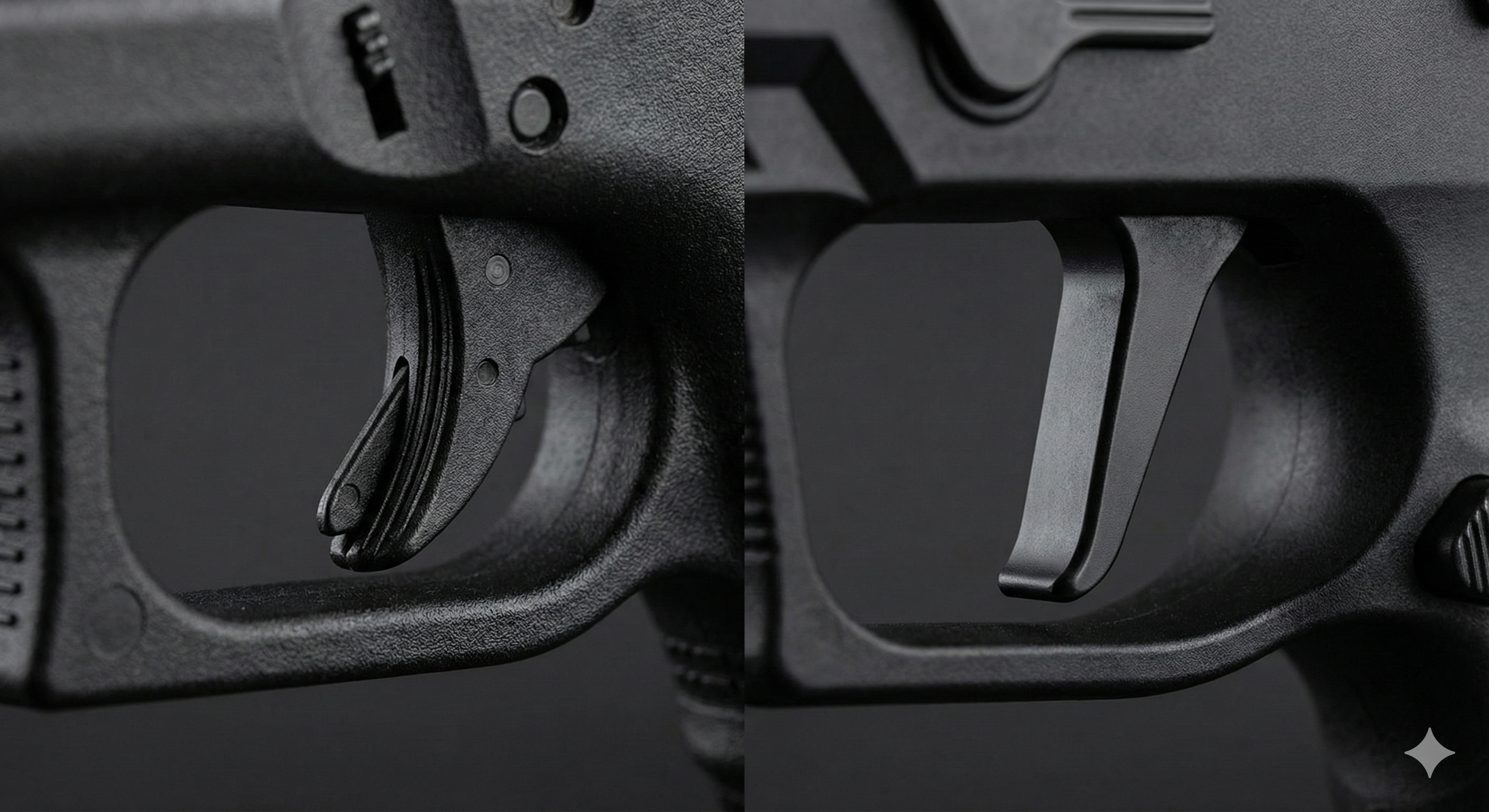
The Glock 19 uses Glock's Safe Action trigger system, a striker-fired design with a 5.5 lb pull weight. You'll feel a bit of take-up, hit a distinct wall, then experience a crisp break. The reset is short and tactile, easy to find without looking.
Is it a great trigger? It's a good trigger. Consistent, predictable, and perfectly serviceable for defensive use. Few shooters rave about it, but it gets the job done reliably.
If you want better, the aftermarket delivers. Companies like Apex, Overwatch, and Agency Arms offer drop-in upgrades that dramatically improve the feel.
Sig P320 Trigger
The P320 features a striker-fired trigger with a flat-faced design on newer models. Pull weight lands between 5.5 and 6.5 lbs depending on the variant.
Most shooters notice a smoother take-up compared to the Glock, with a clean, predictable break that requires less effort to shoot well. The reset is audible and positive without being mushy.
Many reviewers and everyday carriers consider the P320's trigger superior out of the box. That said, trigger preference is subjective—what feels natural to one shooter may not click for another. If possible, dry fire both before committing.
Modularity and Customization
The P320's Modular Advantage
The P320's standout feature is its Fire Control Unit—a removable steel chassis that houses the trigger group and carries the serial number. Everything else is just parts.
This means you can swap grip modules for different sizes (subcompact, compact, carry, full) or configurations (standard, X-Series, AXG metal frames). Change slides and barrels to alter length or caliber. Essentially, one serialized FCU can become multiple distinct pistols.
Sig offers factory configurations like the X-Carry, X-Compact, and Spectre series, each with different grip textures, slide cuts, and features. For shooters who want one gun that adapts to range duty, competition, and concealed carry, this flexibility is genuinely appealing.
For those who just want a reliable carry gun that works? It's admittedly overkill.
Glock 19 Aftermarket
The Glock 19 isn't modular in the P320 sense, but it doesn't need to be. It has the largest aftermarket support of any handgun ever made.
Custom slides from Zev, Agency Arms, and Brownells. Match-grade barrels. Drop-in triggers. Night sights, red dot cuts, stippling services, magwells, extended controls, compensators—if you can imagine it, someone manufactures it for the G19.
This ecosystem lets you customize incrementally over time rather than buying complete conversion kits. Start with sights, add a trigger later, upgrade the slide when budget allows. For tinkerers who enjoy building their perfect pistol piece by piece, nothing else comes close.
Real-World Carry Considerations
Holster Availability
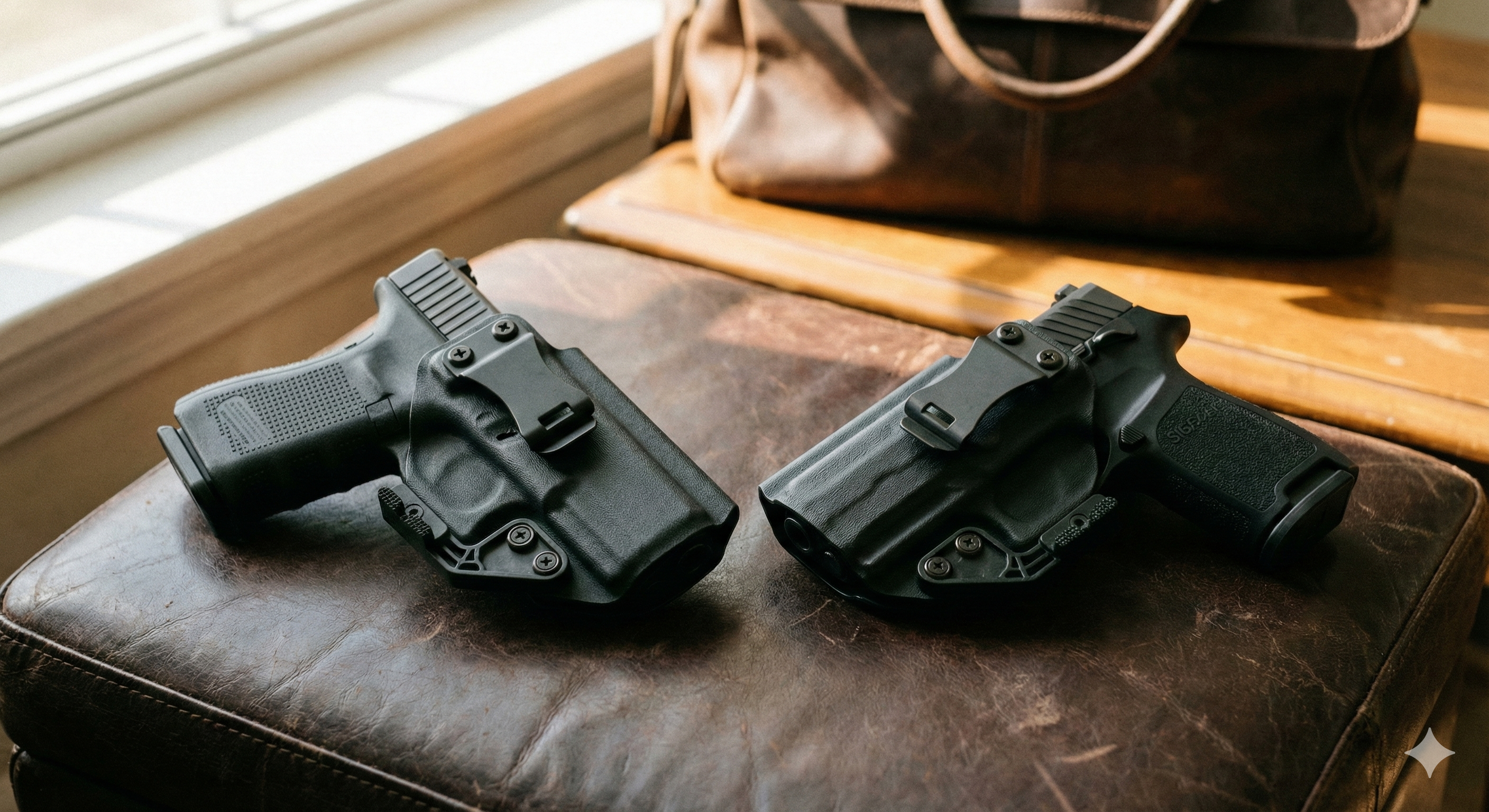
The Glock 19 has been around since 1988, and holster manufacturers have had decades to catch up. Every company making holsters for concealed carry handguns offers G19 options—IWB, AIWB, OWB, shoulder rigs, ankle holsters, and everything in between. Light-bearing options for every weapon light on the market? No problem.
The P320 enjoys excellent holster support too, though the variety is slightly thinner for niche configurations or obscure light/optic combinations. For standard IWB and appendix setups from quality manufacturers like Tenicor, T1C, or JM Custom, you'll have plenty of options for either pistol.
Reliability and Track Record
The Glock 19's reliability is the stuff of legend. Over 35 years of service with military units, law enforcement agencies, and civilian carriers worldwide have cemented its reputation. It's the benchmark other pistols are measured against.
The P320 earned its credibility when the U.S. military adopted it as the M17/M18 service pistol in 2017. That's no small endorsement. However, early P320s had documented drop-safety issues that led to Sig implementing a voluntary upgrade program. Modern P320s have resolved these concerns entirely.
Both platforms are proven and trusted by professionals. That said, the Glock's longer track record provides some buyers with extra peace of mind—fairly or not, it hasn't faced the same early-production scrutiny.
Price Comparison
Both pistols retail between $500 and $600 for standard models, with P320 variants occasionally running slightly higher depending on configuration.
The used market favors the Glock 19—they're everywhere and often priced attractively. Used P320s are less common but still available.
Pricing shouldn't drive your decision here. These are competitively matched, and neither represents a significant financial stretch over the other.
The Verdict — Which Should You Choose?
There's no wrong answer here. Both the Glock 19 and Sig P320 are excellent concealed carry pistols that will serve you reliably for years.
Choose the Glock 19 if you value a decades-long reliability track record, want access to the largest aftermarket in the industry, and prefer a simple, no-frills pistol that just works. It's the safe choice—and there's nothing wrong with safe.
Choose the P320 if you prefer the trigger out of the box, want the flexibility to swap grip modules and configurations, or plan to run multiple setups from a single serialized frame. It's the more modern design with genuine advantages for certain shooters.
The best advice? Visit a local gun shop and handle both. If your range offers rentals, shoot them back to back. Your hands and your instincts will tell you which one feels right. Trust that, make your choice, and carry it with confidence.