
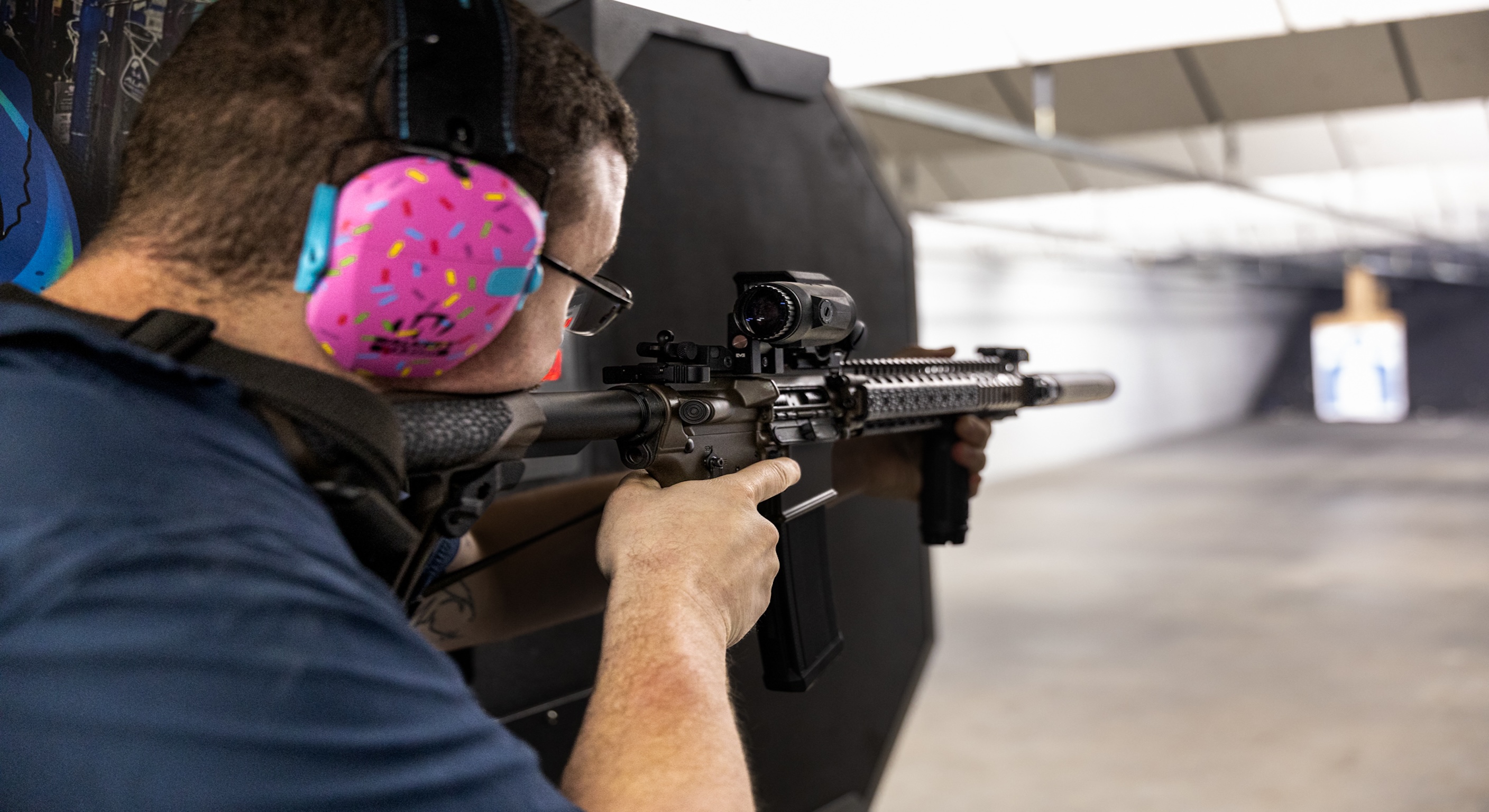
Buying Your First AR-15: A Guide for New Shooters
Posted by Joel Sheran on Jan 23rd 2026
Shopping for your first AR-15 rifle can feel overwhelming. Endless configurations, countless accessories, and everyone with an opinion on what you "need". It's enough to make a new shooter's head spin.
Here's the good news: it doesn't have to be complicated.
For your first AR-15, simple and reliable beats fancy and feature-packed every time. You don't need the most tactical setup or the latest upgrades. You need a rifle that goes bang when you pull the trigger and helps you build solid fundamentals.
In this guide, we'll cover why the AR-15 is ideal for new shooters, which features actually matter, what you can skip for now, and what configuration makes the most sense for your first rifle.
Why the AR-15 Is Perfect for Beginners
Manageable Recoil
The 5.56 NATO/.223 Rem cartridge produces remarkably little felt recoil, far less than traditional hunting rifles or 12-gauge shotguns. The AR-15's design helps too: the buffer system absorbs energy, the rifle's weight dampens impulse, and the inline stock directs recoil straight back into your shoulder rather than snapping upward.
Why does this matter? Low recoil lets you focus on what actually makes you a better shooter: sight alignment, trigger control, and follow-through, without developing a flinch. You'll stay comfortable through longer practice sessions and build good habits from day one.
Intuitive Ergonomics
The AR-15 fits almost everyone. The adjustable stock lets you set the length of pull to match your arm length and body size, while the pistol grip positions your wrist at a natural, comfortable angle.
Controls are straightforward and easy to learn: thumb safety on the left side, magazine release at your trigger finger, bolt catch just above it. Once you've got the basics down, you've got them for good.
Better yet, these controls are nearly identical across all AR-15 brands and configurations. Skills you build on your first rifle transfer directly to any AR-15 you pick up later.
Abundant Resources and Support
No rifle platform has more learning resources than the AR-15. YouTube is packed with tutorials on everything from basic operation to detailed maintenance. Forums and online communities answer questions within hours. Local ranges and training schools offer AR-specific courses for every skill level.
Ammunition is widely available and affordable compared to most rifle cartridges, making regular practice realistic for your budget. If something breaks, replacement parts are everywhere and competitively priced. Nearly every gunsmith in America knows the platform inside and out.
This support ecosystem is a massive advantage over more obscure rifles where parts, knowledge, and help are harder to find.
Features New Shooters Actually Need
A Quality Barrel and BCG
Forget the flashy accessories for a moment. The parts that actually matter are inside the rifle.
A quality barrel, made from 4150 chrome moly vanadium steel with a nitride or chrome-lined finish, ensures accuracy and longevity. A properly tested bolt carrier group (look for MPI and HPT markings) keeps the rifle running reliably.
These two components determine whether your rifle shoots straight and cycles every round without issues. Fancy handguards and upgraded furniture are nice, but they won't fix a cheap barrel or a poorly made bolt. Prioritize what's under the hood first.
Simple, Functional Sights
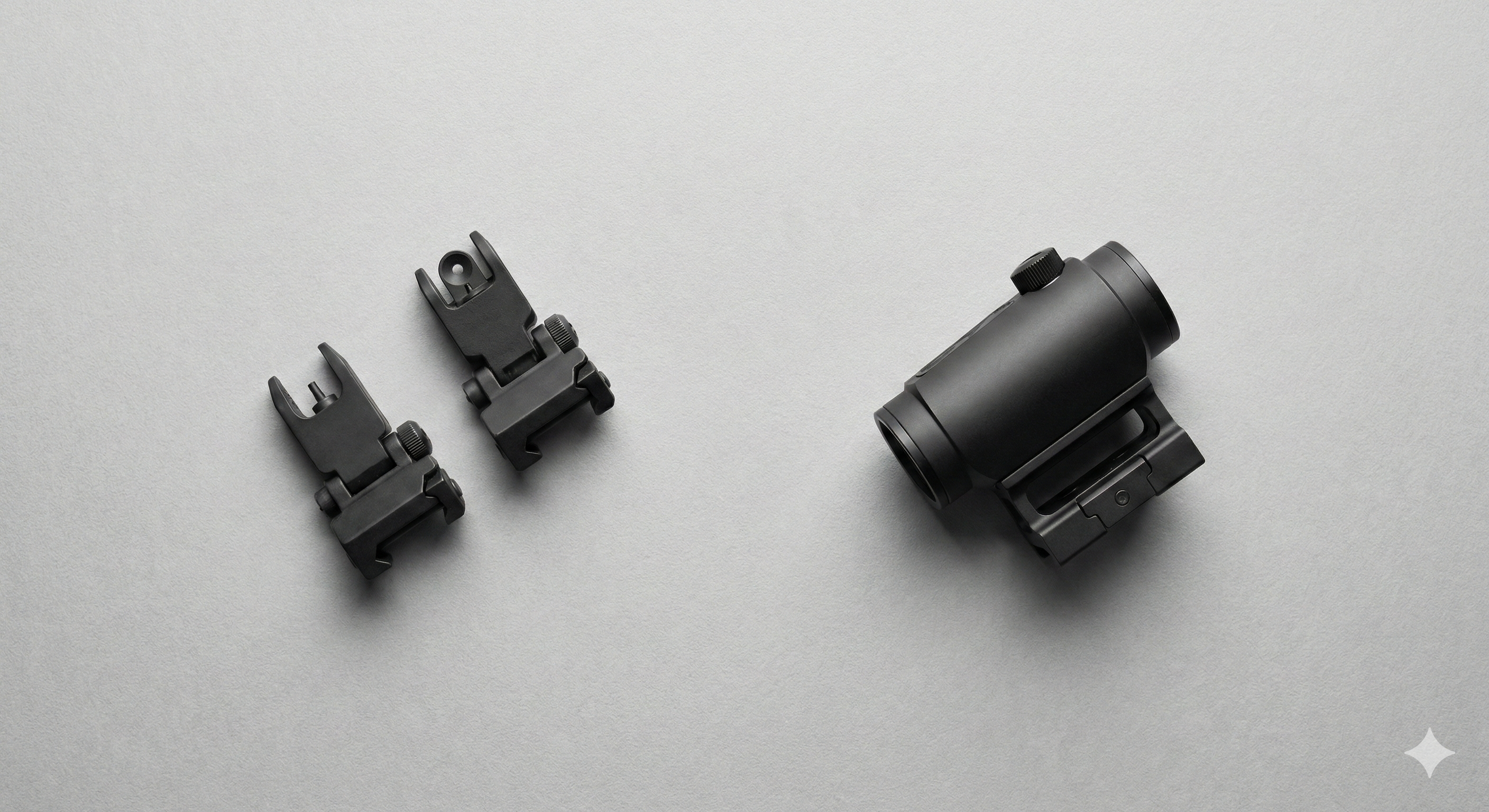
Start simple. If your rifle comes with iron sights, use them. Learning to shoot with irons builds foundational skills that transfer to any optic down the road.
If you prefer a red dot, stick to the $100–$200 range. The Sig Romeo5 and Holosun 403 series are reliable, affordable options that thousands of shooters trust. Both offer shake-awake features and solid battery life.
Avoid magnified optics for now. A 1x red dot or iron sights force you to focus on fundamentals like sight picture and trigger press. You can always add magnification later once your skills catch up.
Standard Controls and Configuration
Stick with standard mil-spec controls on your first rifle. The basic safety selector, magazine release, bolt catch, and charging handle have worked for decades for a reason.
Resist the urge to upgrade to ambidextrous safeties, extended bolt releases, or oversized charging handles right away. These parts solve problems you may not actually have yet. Standard controls are proven, easy to operate, and simple to replace if something breaks.
More importantly, learning on a standard setup builds muscle memory that works on virtually any AR-15 you encounter. Once you have real trigger time, you'll know exactly what upgrades, if any, actually make sense for you.
Features to Skip for Now
Free-Float Handguards and Rail Accessories
Free-float handguards offer a slight accuracy advantage, but at beginner skill levels and typical range distances, you won't notice the difference. A standard handguard works just fine while you're learning.
More importantly, resist the temptation to load up your rails with accessories. Foregrips, lasers, flashlights, backup sights, and anything else you can bolt on add weight. A heavier rifle is harder to hold steady and more fatiguing to shoot.
Keep your first rifle light and simple. Once you've logged some range time and understand what you actually need, you can add accessories with purpose rather than guesswork.
Adjustable Gas Blocks and Specialty Triggers
Adjustable gas blocks let you fine-tune how the rifle cycles, but they require knowledge to set correctly. Get it wrong and you'll introduce reliability problems you didn't have before. For a first rifle, a standard fixed gas block is the smarter choice.
Aftermarket triggers feel nicer, no question. But a standard mil-spec trigger is perfectly adequate for learning. Some instructors actually prefer beginners start with heavier triggers because they build better discipline and reveal bad habits like jerking or slapping.
Save these upgrades for later. Master the fundamentals first, then upgrade with intention once you know what you're actually improving.
Short Barrels and Pistol Configurations
AR pistols and short-barreled rifles look cool, but they're not ideal for learning. Barrels under 16 inches produce significantly more muzzle blast and noise, which can be disorienting for new shooters and unpleasant for everyone nearby at the range.
Shorter barrels also sacrifice velocity and are harder to shoot accurately, especially for someone still developing fundamentals. A standard 16-inch barrel offers the best balance of maneuverability, terminal performance, and shootability.
There's also legal complexity to consider. Pistol braces and SBRs come with regulations that new shooters don't need to navigate yet. Start with a standard rifle configuration. You can explore compact setups later once you have experience.
Recommended Configurations for Your First AR-15
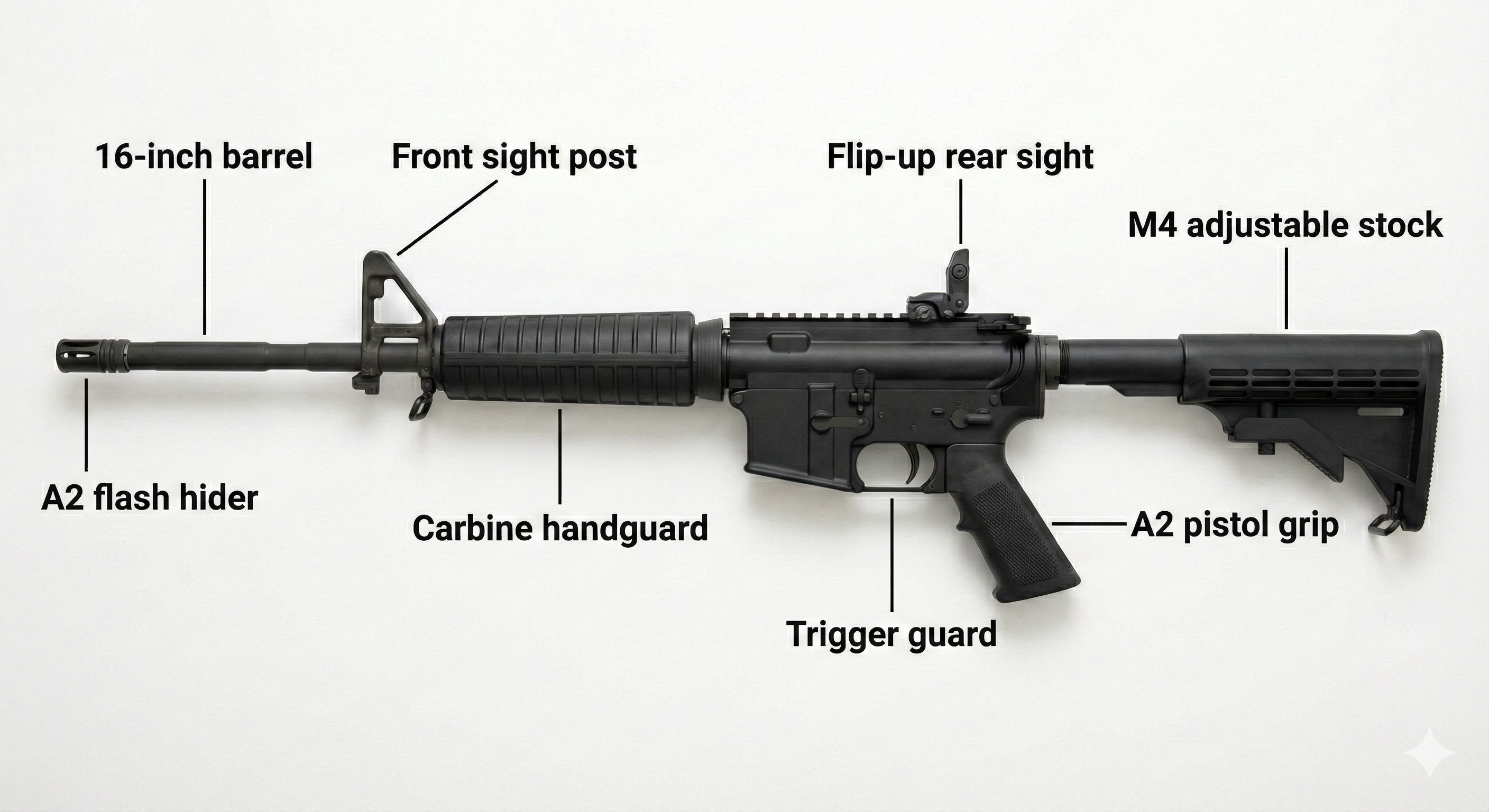
The ideal first AR-15 is straightforward: a 16-inch barrel with a mid-length gas system, a standard carbine or M4-style adjustable stock, and a simple A2 pistol grip. For sights, either a front sight post paired with a rear flip-up or a flat-top upper ready for a red dot works perfectly.
This configuration isn't exciting, and that's the point. It's proven, reliable, and lets you focus on shooting rather than fiddling with features.
The good news is this describes most entry-level offerings from reputable manufacturers. If you want specific rifle recommendations, we cover entry-level AR-15s worth buying in detail separately.
Prioritize reliability and simplicity over features. A boring rifle that runs every time is exactly what you need right now. You'll develop preferences as you gain experience, and upgrades can always come later once you actually know what you want to change and why.
What to Buy Alongside Your First AR-15
Essential Accessories
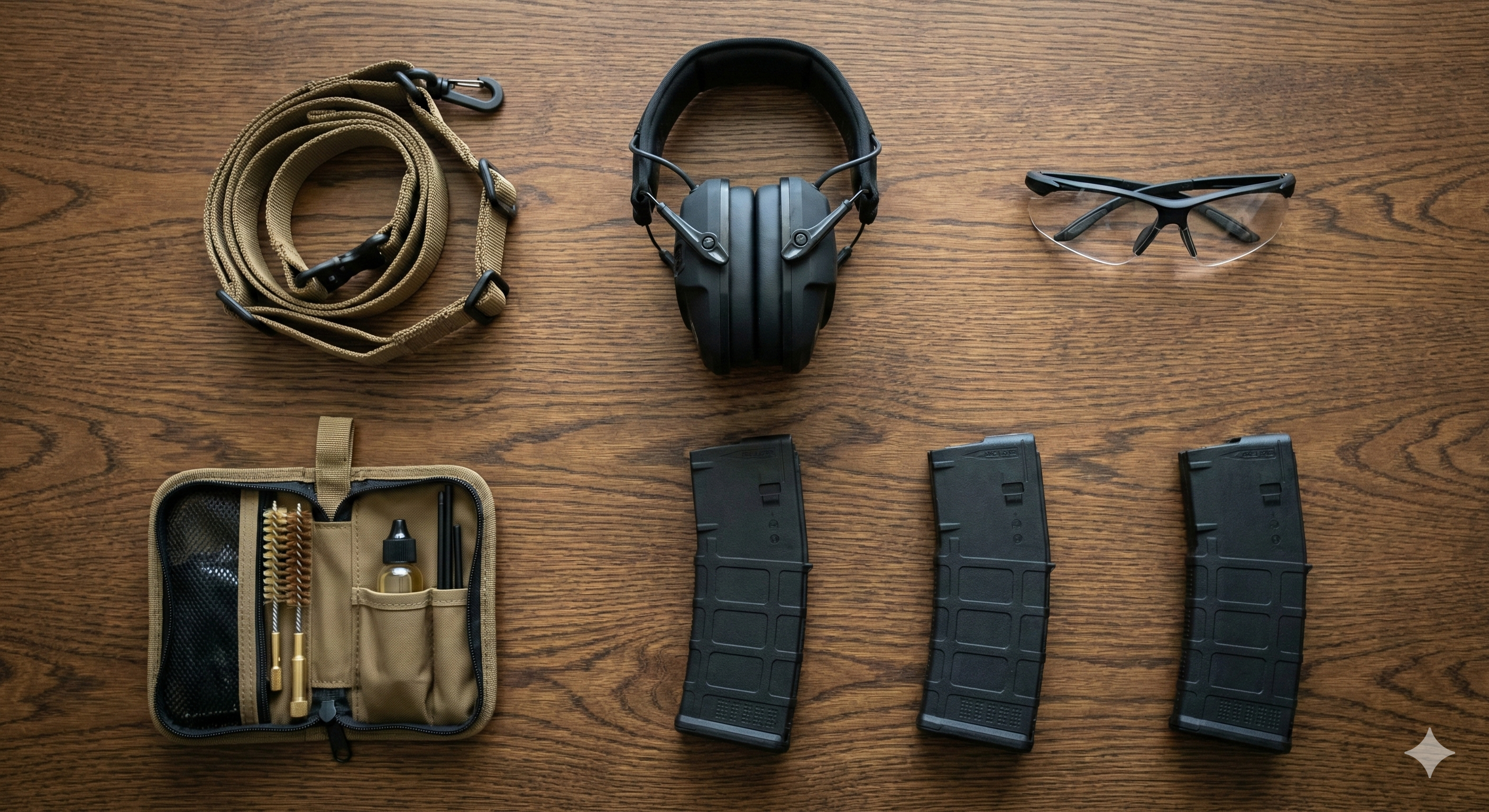
Your rifle needs a few supporting items before you hit the range.
A two-point sling ($25–$50) is the most underrated accessory you can buy. It makes carrying comfortable and actually improves shooting stability. Get one immediately.
Eye and ear protection are non-negotiable. Quality shooting glasses run $15–$30, and electronic ear protection ($40–$80) lets you hear range commands while protecting your hearing.
A basic cleaning kit ($20–$35) keeps your rifle running. Nothing fancy needed, just bore brushes, patches, solvent, and lubricant.
Finally, pick up at least two additional magazines ($15–$20 each). You'll want them for practice and to have spares on hand.
These essentials matter more than any tactical upgrade.
Ammunition for Practice
Stock up on brass-cased 55-grain FMJ ammunition for practice. It's affordable, widely available, and runs reliably in virtually every AR-15 on the market. Brands like Federal, Winchester, and PMC are solid choices.
Budget for at least 500 rounds initially. That sounds like a lot, but meaningful practice burns through ammunition quickly. Buying in bulk saves money over time.
Steel-cased ammo from manufacturers like Wolf or Tula is cheaper, but it's harder on extractors and some indoor ranges don't allow it due to fire concerns. Stick with brass while you're learning.
Save the premium defensive ammunition for later. There's no point running expensive hollow points until you're actually proficient with the rifle and ready to zero for a specific load.
The Bottom Line
Simple and reliable beats complicated and feature-packed. That's the core message for your first AR-15.
Resist the temptation to buy the most accessorized rifle on the rack or immediately upgrade everything the moment you get home. The fundamentals of marksmanship matter far more than gear. A shooter with solid skills and a stock rifle will outperform someone with a tricked-out build and no training every single time.
Once you have your rifle, consider taking a basic carbine course. Professional instruction accelerates your learning faster than any accessory purchase ever will.
The AR-15 platform is approachable, versatile, and backed by an incredible community of shooters and resources. You're making a great choice. Now keep it simple, put in the range time, and build your skills on a solid foundation.
Ready to find your first rifle? Browse our AR rifle options and start your search.