
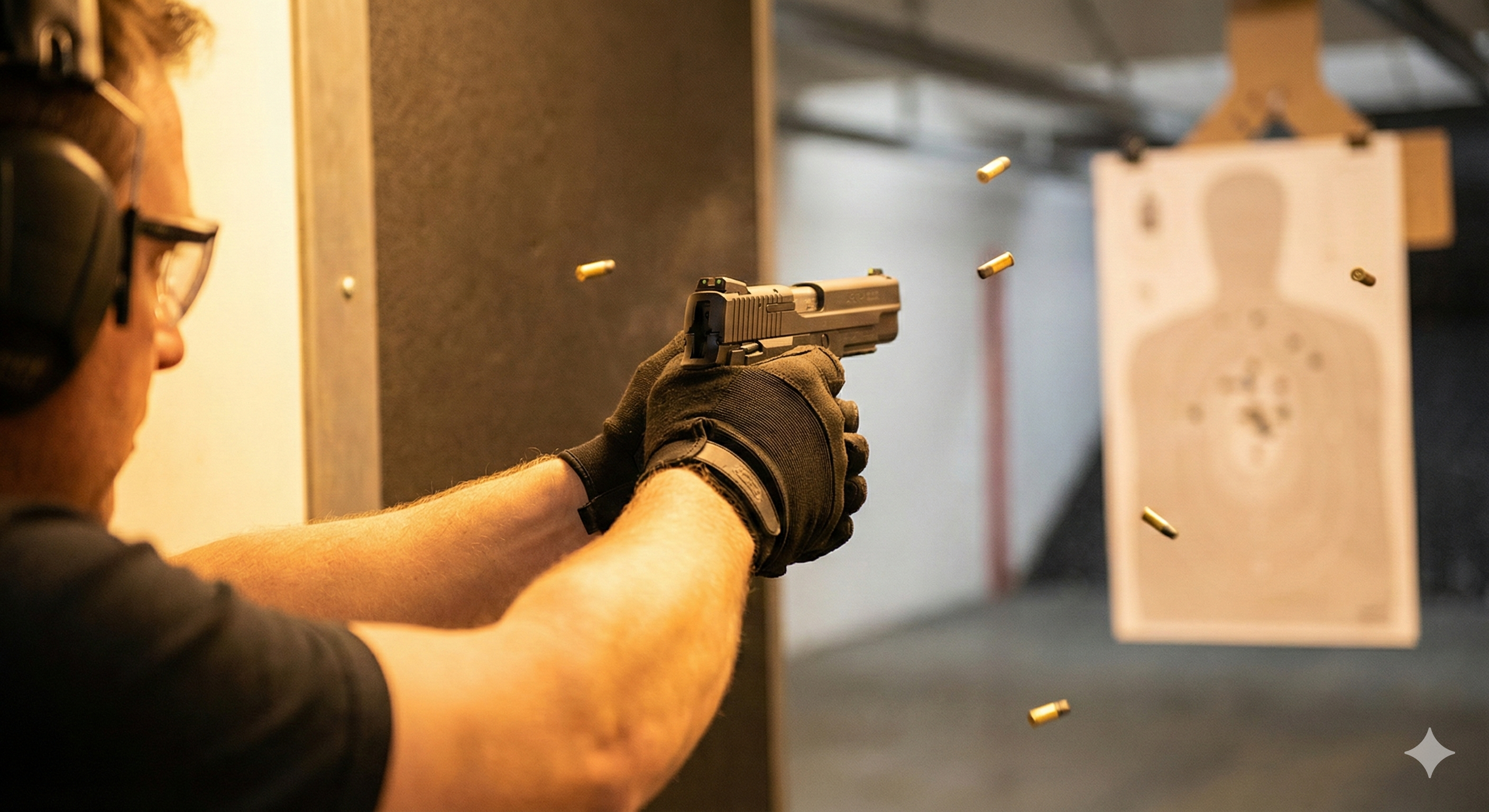
.22 LR for Training: Why It's Worth It
Posted by Joel Sheran on Jan 30th 2026
Many shooters dismiss .22 LR as nothing more than a plinking round or a caliber for kids learning to shoot. That assumption sells rimfire short. Competitive shooters, military trainers, and serious firearms instructors use .22 LR regularly to build and maintain their skills. The minimal recoil and low cost make it an ideal training tool for developing fundamentals that transfer directly to centerfire shooting.
Whether you're a new shooter looking to build a solid foundation or an experienced marksman wanting to sharpen your skills without emptying your wallet, .22 LR training deserves a place in your routine. This article covers the training benefits, cost advantages, and platform options that make rimfire practice worth your time.
The Training Benefits of .22 LR
Mastering Fundamentals Without Flinch
Recoil anticipation, commonly called flinching, is one of the most widespread problems shooters develop. It's surprisingly easy to pick up bad habits when training exclusively with centerfire calibers, as the body naturally braces for recoil before the shot breaks. .22 LR produces almost no recoil, allowing shooters to focus purely on the fundamentals: grip, sight alignment, trigger press, and follow-through. Without the anticipation of a sharp kick, you can concentrate on executing each shot correctly. Flinch is far easier to prevent than to fix once it becomes ingrained. That makes .22 LR an ideal starting point for new shooters and a valuable diagnostic tool for experienced shooters who want to check whether their fundamentals have slipped.
Higher Volume, More Repetitions
Skill development requires repetitions. More trigger time equals faster improvement, and .22 LR makes high-volume practice realistic. With its low cost and negligible recoil, shooters can comfortably fire 200 to 500 rounds in a session without physical fatigue or financial strain. Compare that to centerfire practice, where cost and recoil often limit sessions to 50 or 100 rounds. When building muscle memory for sight alignment, trigger control, and follow-through, volume matters. The shooter who puts 500 rounds downrange in a week will progress faster than one who fires 50.
Diagnosing and Fixing Bad Habits
Without recoil masking your mistakes, shooting errors become immediately visible on target. Jerking the trigger, improper grip pressure, and anticipating the shot all show up as clear patterns in your groups. Many instructors use .22 LR drills specifically to identify problems that centerfire recoil hides. This makes rimfire training a powerful tool for experienced shooters who want to audit their technique. If your groups open up or shift when shooting .22, you've found something to work on. It's not just a beginner's caliber—it's a diagnostic instrument.
The Cost Advantage
Ammunition Savings
The cost difference between .22 LR and centerfire ammunition adds up quickly. .22 LR runs roughly $0.05 to $0.10 per round, while 9mm typically costs $0.25 to $0.35 per round and 5.56 NATO runs $0.35 to $0.50. Put those numbers into a training session and the savings become obvious. A 500-round session in .22 LR costs $25 to $50. That same volume in 9mm would run $125 to $175. Over months and years of regular practice, you're looking at hundreds or thousands of dollars saved—money that can go toward more training, better equipment, or additional firearms.
Reduced Wear on Primary Firearms
Every round fired contributes to barrel wear, spring fatigue, and general component wear on your firearm. High-volume training accelerates this process. By dedicating a .22 pistol or rifle to your training sessions, you preserve the lifespan of your carry guns, competition guns, or defensive rifles. The rounds that matter most—the ones you might need for self-defense or competition—will go through a gun with less accumulated wear. Conversion kits offer another option, allowing you to train on the same platform without putting centerfire wear on your primary firearm.
Platform Options for .22 LR Training
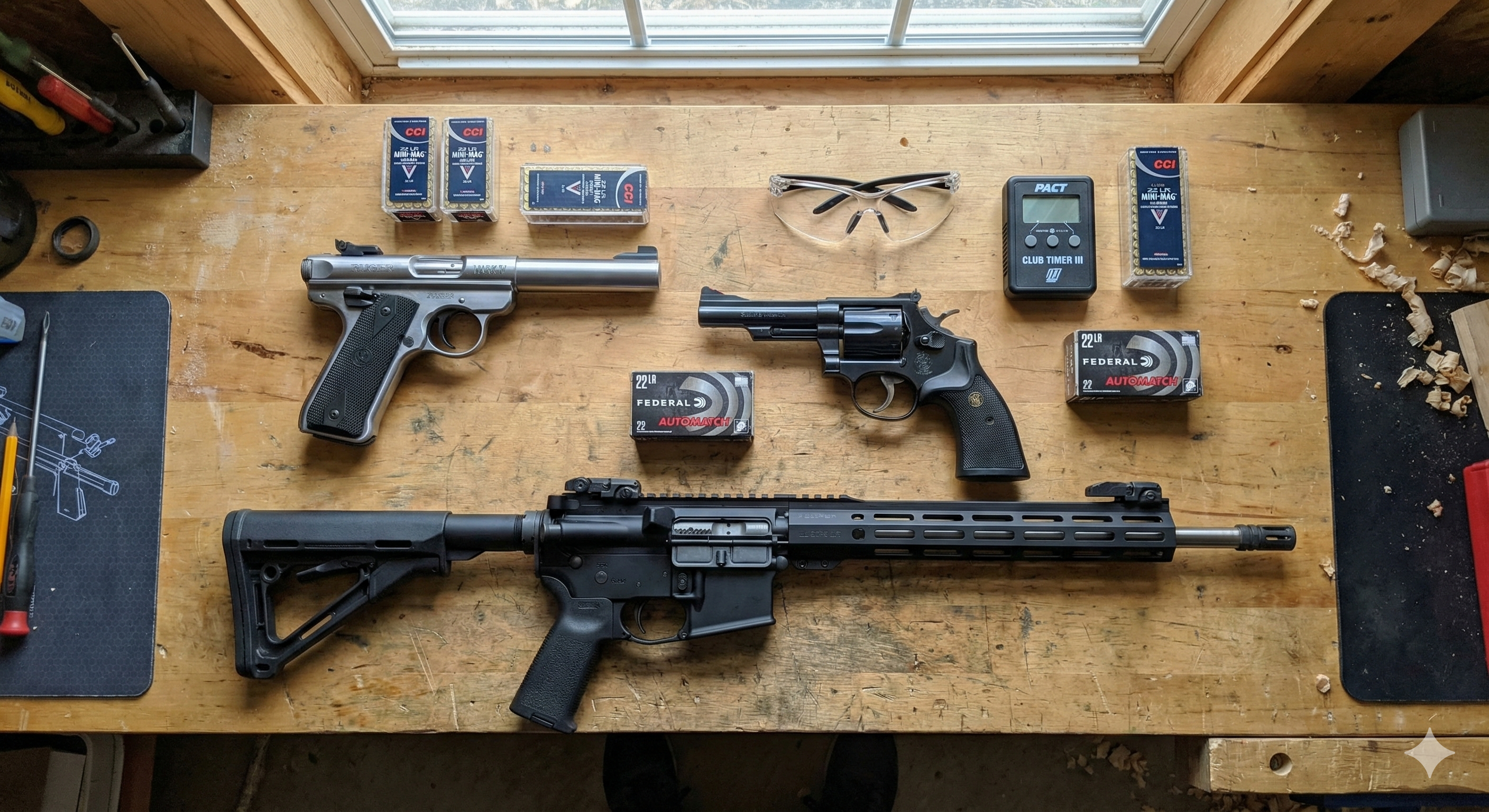
Dedicated .22 Pistols
The market offers several excellent dedicated .22 pistols designed for serious training. The Ruger Mark IV has been a range staple for decades, known for its accuracy and the improved takedown system that makes cleaning simple. The Smith & Wesson SW22 Victory offers similar precision with an adjustable fiber optic sight system. The Browning Buck Mark provides exceptional accuracy out of the box, and the Taurus TX22 has earned a reputation for running reliably with a variety of ammunition at an accessible price point. While the controls on these guns differ from centerfire carry pistols, the fundamentals of grip, sight alignment, and trigger control transfer directly to any handgun you shoot.
.22 LR Revolvers
.22 revolvers offer a different training experience with their own benefits. The Ruger Wrangler provides single-action practice at an entry-level price. The Smith & Wesson Model 17 is a classic double-action revolver with a smooth trigger. The Heritage Rough Rider offers affordable single-action shooting for those who want cowboy-style practice. Revolvers excel at teaching trigger control, especially when practicing long double-action pulls. They're also excellent for introducing new shooters to handguns in a low-pressure, low-recoil format where the manual of arms is simple and intuitive.
.22 LR Conversion Kits
Conversion kits allow you to run .22 LR through your existing centerfire pistol or rifle. Companies like Advantage Arms, CMMG, and Tippmann offer drop-in kits for popular platforms including Glock pistols, 1911s, and AR-15 rifles. The advantage is obvious: identical controls and ergonomics to your primary firearm, making skill transfer seamless. You practice with the same grip angle, trigger reach, and manual of arms you'll use when it counts. The tradeoff is that conversion kits can be finicky with ammunition selection. They typically require quality ammo to run reliably, and you may need to test several brands to find what cycles consistently.
Dedicated .22 LR Rifles
For rifle shooters, dedicated .22 LR platforms provide affordable training on fundamentals and transitions. The Ruger 10/22 remains the classic choice, with decades of aftermarket support and a well-earned reputation for reliability. For AR-platform training, the Smith & Wesson M&P 15-22 and Tippmann M4-22 replicate the controls and handling of a standard AR-15. These rifles let you practice rifle fundamentals, positional shooting, and target transitions at a fraction of centerfire cost. Anyone who trains regularly with an AR-15 platform will benefit from having a .22 LR counterpart.
Making the Most of Your .22 Training
Treat It Like Real Training
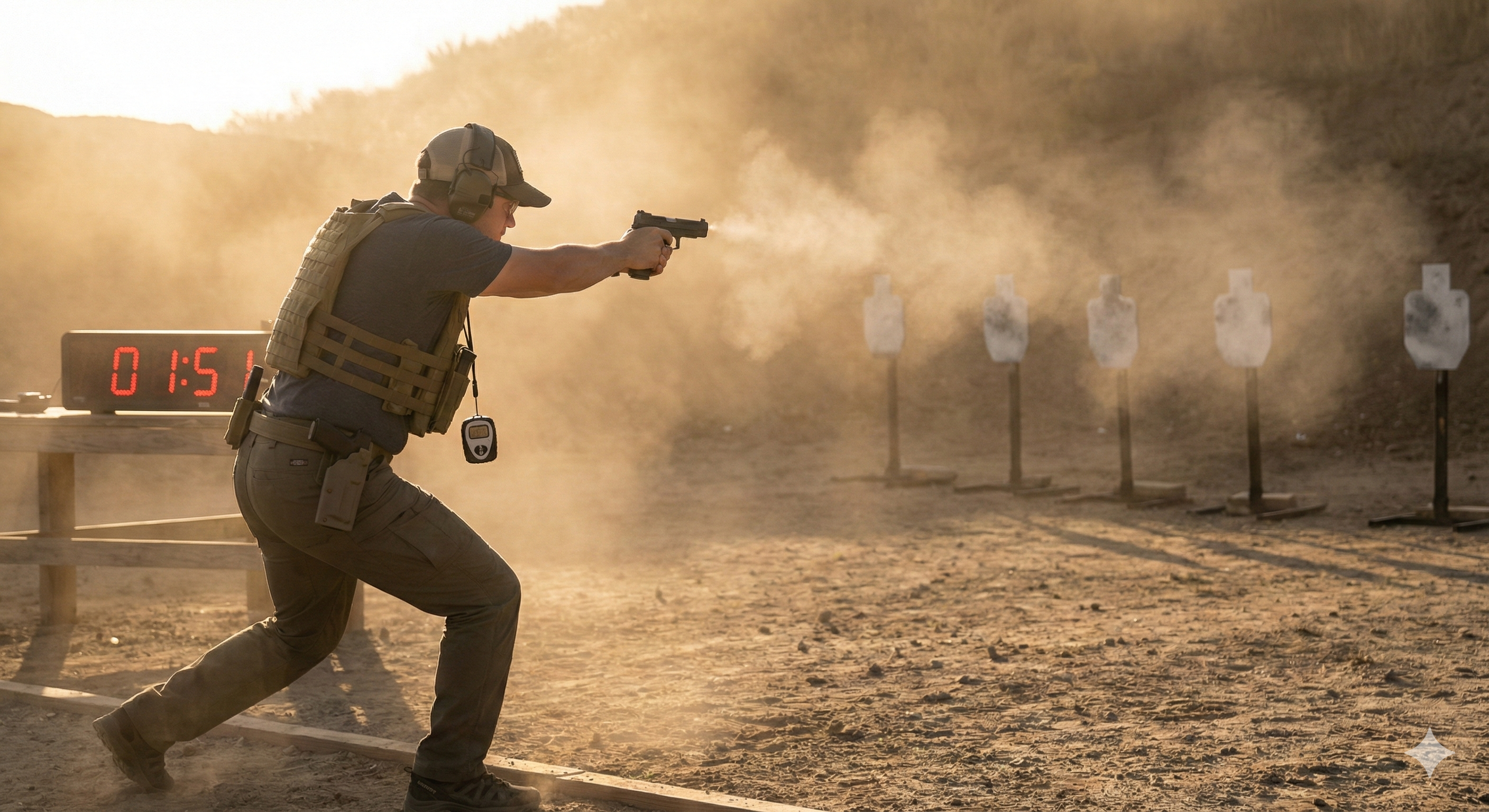
The value of .22 LR training depends entirely on how you approach it. Lazy plinking reinforces lazy habits. Approach your rimfire sessions with the same seriousness you'd bring to centerfire practice. Run actual drills with specific goals. Use a shot timer to measure your performance and track improvement. Set standards and hold yourself to them. If your range allows, practice from the holster to build your draw stroke. The minimal recoil of .22 LR is only an advantage if you're using it to engrain good technique rather than burning through ammunition without purpose.
Use Quality Ammunition
Not all .22 LR ammunition is created equal. For reliable training sessions, stick with quality brands like CCI, Federal, and Aguila. Bulk-pack ammunition works fine for most training purposes, but it can be inconsistent in velocity and ignition. Rimfire ammunition is inherently less reliable than centerfire, so occasional failures to fire are normal—and actually provide good malfunction-clearing practice. Test different brands in each of your guns to find what runs best. A gun that's picky about ammunition isn't necessarily defective; rimfire firearms often have preferences.
The Bottom Line
.22 LR training isn't a step backward or a shortcut. It's a smart investment in skill development that the best shooters in the world use regularly. The benefits are clear: building fundamentals without developing flinch, enabling high-volume practice that accelerates improvement, saving significant money on ammunition, and reducing wear on your primary firearms. Whether you choose a dedicated rimfire pistol, a conversion kit for your carry gun, or a .22 rifle that mirrors your AR-15, adding a rimfire trainer to your rotation will make you a better shooter. Don't let assumptions about "kid's calibers" keep you from a training tool that competitive shooters and instructors rely on daily. Your fundamentals—and your wallet—will thank you.